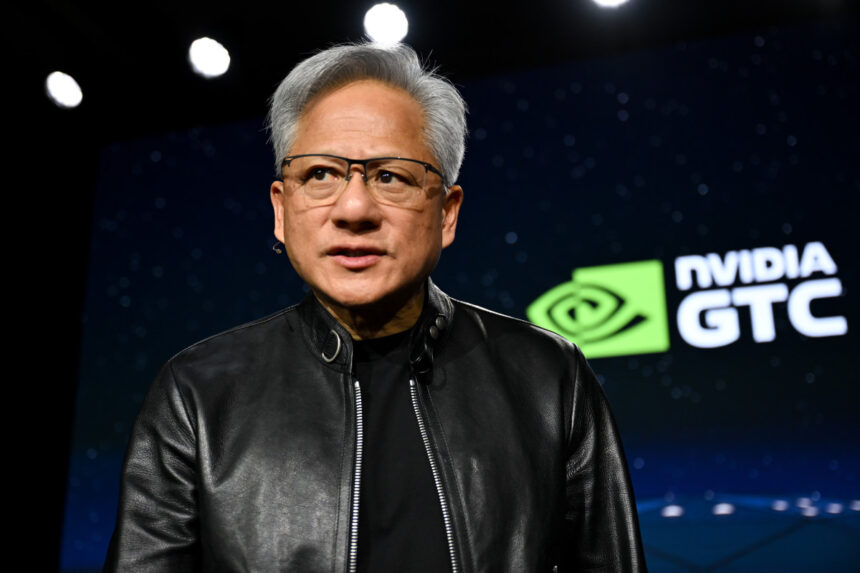
A federal judge in California has certified an investor class in a securities lawsuit against Nvidia Corporation and its founder and CEO, Jensen Huang, stemming from allegations of misleading shareholders about the company’s gaming revenue. The lawsuit particularly highlights the revenue generated from the sale of graphics processing units (GPUs) to cryptocurrency miners during 2017 and 2018.
Nvidia, a technology giant founded in 1993, reached a significant milestone last year by becoming the world’s first company to attain a market capitalization of $5 trillion. Presently, it holds a market cap of approximately $4.26 trillion, making it the largest company globally.
During the crypto boom of 2017-2018, Nvidia’s GPUs were widely used by crypto miners to mine cryptocurrencies like Bitcoin. In 2018, investors initiated legal action against the company and Huang, alleging that Nvidia understated over $1 billion in GPU sales attributed to crypto mining.
The plaintiffs pointed to specific instances during 2018, such as the earnings call and guidance update on August 16, and a revenue warning issued on November 15, which indicated the company’s exposure to the volatile crypto mining market. Following these disclosures, Nvidia’s stock price experienced declines.
In May 2022, Nvidia settled with the Securities and Exchange Commission (SEC) for $5.5 million over insufficient disclosures relating to the effects of crypto mining on its gaming business. The SEC emphasized that while Nvidia recognized that the growth in gaming sales was significantly influenced by crypto mining, the company failed to disclose the significant fluctuations in earnings and cash flow associated with this unpredictable segment of its business.
On March 25, Judge Haywood Gilliam ruled that investors who purchased Nvidia stock between August 10, 2017, and November 15, 2018, could pursue their claims collectively. However, it is important to note that the certification of the investor class is merely a procedural step and does not address whether Nvidia’s statements were indeed fraudulent.
In response to the ruling, an Nvidia spokesperson stated that investors who bought shares during the specified timeframe have benefitted significantly as the company’s corporate strategy unfolded as previously predicted. The spokesperson added that Nvidia plans to contest the complaint in court.