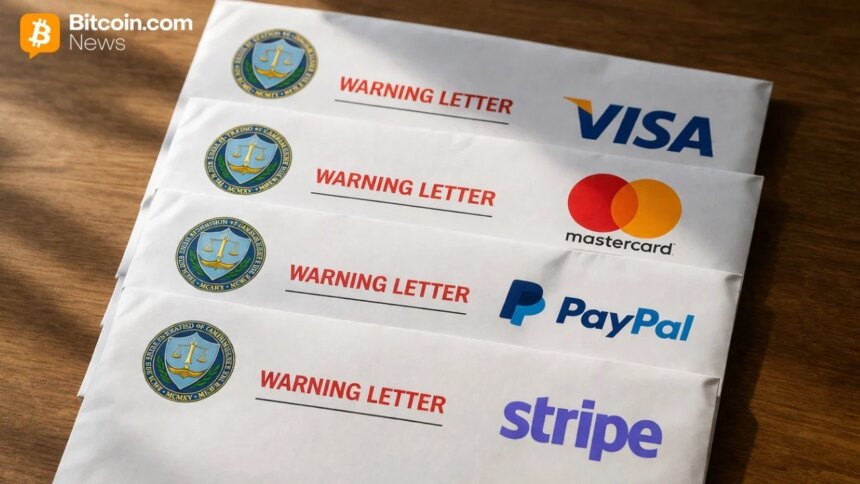
Access to financial services has emerged as a significant policy issue, with federal regulators intensifying their scrutiny of industry practices. Recently, Federal Trade Commission (FTC) Chairman Andrew N. Ferguson issued warning letters to major payment platforms including PayPal, Stripe, Visa, and Mastercard. Sent on March 26, these letters raise concerns regarding customer access and compliance with the FTC Act.
The primary focus of the regulatory attention is on whether these platforms’ decisions to restrict user access align with their contractual obligations and consumer expectations. Reports have surfaced indicating that some customers were denied services due to their political or religious beliefs, which raises serious questions about potential unfair or deceptive conduct in the financial services landscape.
In his letters, Ferguson emphasized that the ability to participate fully in commerce and public life is essential. He underscored that law-abiding individuals should have access to the financial system without discrimination. The warnings suggest that actions inconsistent with established terms or reasonable consumer expectations could lead to investigations or enforcement actions by the FTC.
The implications extend beyond the companies directly targeted. Concerns related to the broader financial ecosystem were highlighted, particularly regarding how payment networks manage and sometimes restrict transactions. Companies are alerted that facilitating third-party decisions to exclude users from services may also fall under the regulatory microscope, especially if such actions contradict disclosed policies.
Ferguson articulated a strong stance against practices that marginalize users, stating, “It is inconsistent with American values to deny law-abiding individuals the ability to run their legitimate businesses and feed their families because they attracted the ire of rogue American officials, overzealous activists, or, more worryingly, foreign governments seeking to control public discourse.” This quote encapsulates the FTC’s commitment to ensuring equitable access within the financial services sector.
Historical enforcement actions reinforce the agency’s position. The FTC has previously pursued cases against payment platforms regarding misleading fee disclosures, dubious contract terms, and practices that facilitated fraudulent activities. This recent outreach underscores the potential for similar scrutiny to apply to account restrictions or service denials if they diverge from representations made to users.
Moreover, the letters reference a 2025 executive order that explicitly states that denying services based on political beliefs, religious affiliations, or lawful activities is unacceptable. This further establishes a framework for compliance expectations across major payment providers.
The ramifications of this regulatory scrutiny are significant, raising questions about how payment firms like PayPal, Visa, Mastercard, and Stripe will navigate potential investigations or enforcement actions. The heightened regulatory pressure may lead to increased compliance costs and expose these firms to potential legal risks, impacting investor sentiment.
This development also indicates a broader trend within the fintech space, where authorities are expanding their oversight regarding how platforms manage access to financial services. As scrutiny intensifies and regulations evolve, both service providers and users may face new challenges and expectations in this complex financial landscape.