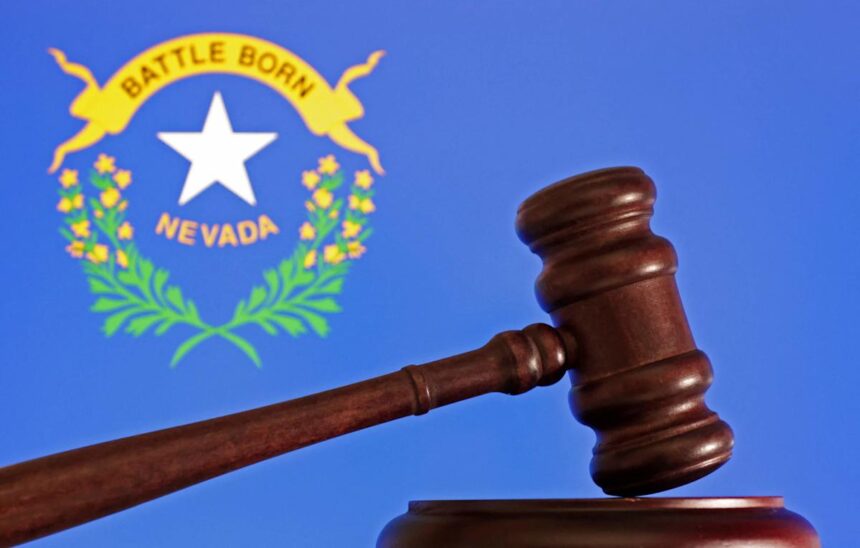
The First Judicial District Court of Nevada has taken decisive action against Coinbase, issuing a preliminary injunction that prohibits the cryptocurrency exchange from offering event contracts within the state. This decision follows a temporary restraining order granted in February, which effectively barred Coinbase from operating in Nevada during the ongoing legal dispute.
On March 26, the court reaffirmed its stance, believing that Nevada is likely to succeed in its case against the prediction market operator. This injunction against Coinbase came shortly after the state achieved a favorable ruling against Kalshi, another operator in the prediction market sphere, where the court also issued a temporary restraining order on March 20. In less than a week, Nevada has successfully challenged two entities involved in the prediction markets, marking a significant moment in its regulatory efforts.
Traditionally known as a cryptocurrency trading platform, Coinbase ventured into the prediction market business earlier this year through a partnership with Kalshi, aiming to expand its portfolio. Prediction markets facilitate contracts that speculate on the outcomes of various events, from sports to political happenings. However, these markets operate without licenses or regulations in many states, raising questions about their legality.
Advocates of prediction markets argue they do not fall under state regulation, claiming that the Commodity Exchange Act (CEA) assigns their oversight exclusively to the Commodity Futures Trading Commission (CFTC). This belief is not universally accepted, as evidenced by the sentiments of several states and courts. The Nevada court, in its ruling, asserted that “the current state of the law” does not support the notion that the CEA grants exclusive jurisdiction over the event contracts offered by Coinbase.
The legal landscape for prediction markets is complex, with more than a dozen states currently involved in lawsuits challenging their operations. While recent court decisions have generally favored state regulations, discrepancies remain. For example, Massachusetts recently issued a preliminary injunction against Kalshi, while a different court ruled in favor of Kalshi against the state of Tennessee, preventing enforcement of local gambling laws.
Given the ongoing legal battles and the ambiguous nature of federal preemption surrounding prediction markets, it appears increasingly probable that the U.S. Supreme Court may eventually need to address these contentious issues to provide clarity and resolution.