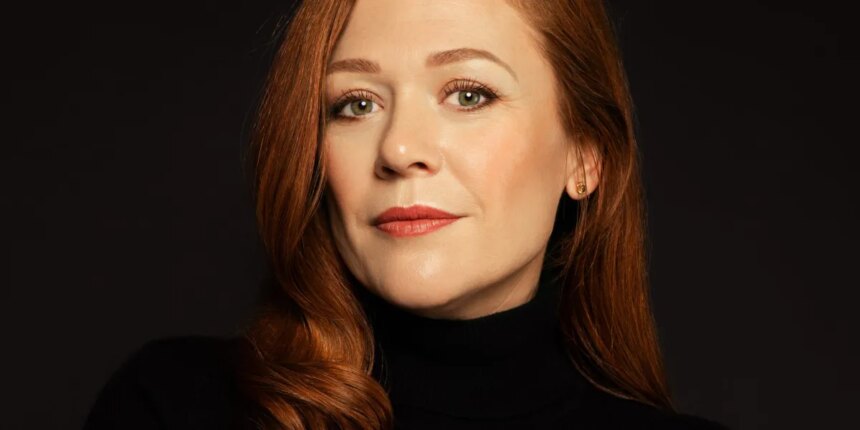
As Women’s History Month concludes, a significant development in the bra industry highlights the persistence of innovation even centuries after original designs. A pivotal patent, which had remained largely unchanged for 88 years, was recently challenged by Bree McKeen, the founder of Evelyn & Bobbie.
The story traces back to 1931, when Helene Pons received a U.S. patent for a brassiere featuring an open-ended wire loop design—an approach that has dominated the market for decades. Despite its prevalence, the discomfort associated with this design has prompted women to seek alternatives. The global bra market is projected to approach $60 billion by 2032, indicating a ripe opportunity for innovation.
McKeen’s journey began with a personal struggle. While working at a boutique venture capital firm focused on consumer health care, her lengthy hours at the desk left her with physical discomfort, notably divots on her shoulders and chronic tension headaches. After consulting a physiologist about her posture, she made a startling realization: her pain stemmed not from her workload but rather from her bra.
The physiologist introduced her to the concept of a neuromuscular feedback loop, illustrating how her body instinctively adjusted to pain. This spurred McKeen to initiate a significant career shift, trading her venture capital role for a quest in fashion, despite having no prior experience in the industry. Determined to craft a solution, she relocated to Portland, a hub of significant athletic and apparel brands, to leverage local inspiration and connections.
McKeen began working on prototypes and swiftly filed for intellectual property rights, understanding their necessity for securing venture funding. Within a year, she obtained her first utility patent—an accomplishment considering that women hold only 12% of patents in the U.S., as per the U.S. Patent and Trademark Office statistics from 2019. Currently, Evelyn & Bobbie holds 16 international patents protecting its proprietary EB Core technology, which aims to provide structured support without the discomfort of traditional underwire bras.
Named in honor of McKeen’s grandmother and aunt, Evelyn & Bobbie operates under a straightforward yet powerful philosophy: to create bras that look great and feel even better. McKeen, reflecting on the market, noted that “wire-free bras give you that mono boob—not a nice silhouette,” highlighting a common issue faced by women wearing bras that don’t suit their body needs.
In a saturated market filled with brands like Victoria’s Secret and Aerie, McKeen’s Evelyn & Bobbie differentiates itself with a unique sizing approach. Employing 270 fit models across seven sizes, the brand ensures each style is tailored for optimal fit rather than relying on a single sample size.
McKeen noted that the average U.S. bra size is a 34F—a statistic that surprises many potential investors who initially struggled to see the market value of comfort. She recounted her experiences in pitch meetings, where she often had to spend the majority of the time convincing skeptical investors that comfort mattered in women’s apparel.
Today, Evelyn & Bobbie enjoys a growing reputation, with McKeen fostering a community of customer appreciation. She partners with healthcare professionals who provide her bras to post-operative patients, reflecting a focus on both comfort and health. Furthermore, a sports bra line is currently in development.
Each bra from Evelyn & Bobbie retails for $98, a premium price intended to encourage investment in comfort. McKeen aptly summarized her vision, stating, “Comfort is the new luxury,” paralleling the investment women make in lifestyle products like yoga pants. Her ambition is clear: to redefine the bra as a pioneering piece of women’s fashion, paving the way for a future where comfort and style coexist harmoniously.