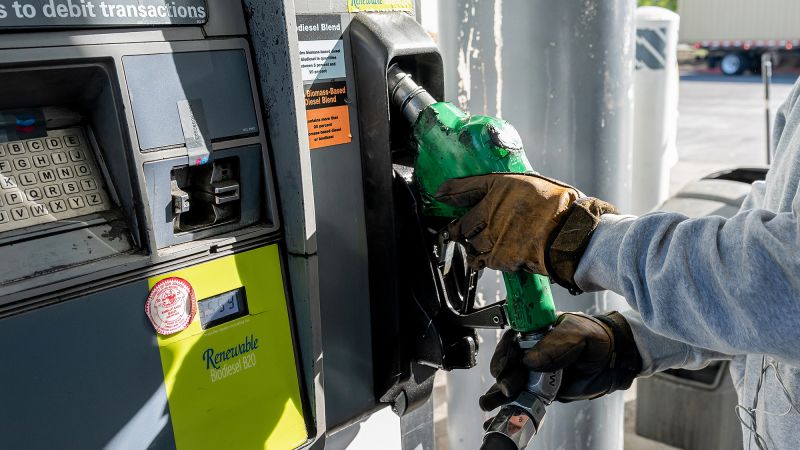
Oil prices experienced a notable increase on Sunday as tensions escalated following warnings from Tehran regarding potential U.S. ground troop involvement in the ongoing conflict. Brent crude, which is the global oil benchmark, rose by 2.47%, reaching $107.92 per barrel. Meanwhile, U.S. crude saw an even larger increase, climbing by 2.94% to hit $102.57 per barrel.
The warning from Iran came through its parliament speaker, who stated that Iranian forces are on alert for American troops. This development follows remarks made by President Donald Trump on Friday, wherein he indicated that diplomatic negotiations aimed at resolving the conflict would continue and extended the ultimatum for Iran to reopen the vital Strait of Hormuz.
In addition to the tensions with Iran, the security of oil transportation has been further complicated by the activities of Yemen’s Iran-backed Houthi rebel group. The Houthis recently launched strikes against Israel and represent an additional threat to oil shipments in the region, particularly concerning the Bab al-Mandab Strait—a critical chokepoint that connects the Red Sea to major global shipping routes.
Efforts to bring the war to a resolution are underway, with foreign ministers from Pakistan, Saudi Arabia, Egypt, and Turkey engaging in discussions that have been deemed “very productive.” Pakistan’s Foreign Minister, Ishaq Dar, announced that his country would facilitate upcoming talks between the U.S. and Iran.
The ongoing conflict has caused unprecedented disruptions to global oil supplies, particularly impacting the Strait of Hormuz, through which approximately 20% of the world’s oil transits. This disruption has led to increased gas prices; Americans are currently paying an average of $3.98 per gallon at the pump.
Experts anticipate that the economic ramifications of rising oil prices will be felt worldwide, with smaller nations—especially in Asia—expected to experience the most severe impacts. Bob McNally, president of Rapidan Energy, highlighted that while a recession could curb oil demand and stabilize prices, it comes at a significant economic cost.
Despite the urgency of the situation, experts caution that gas prices may not decrease rapidly even if the conflict concludes. The timeline for price stabilization will largely depend on the reopening of the Strait of Hormuz and the restoration of damaged infrastructure, such as Qatar’s Ras Laffan—the largest gas production facility globally, which was affected by an Iranian strike in mid-March.
In related financial news, stock futures plummeted on Sunday, with Dow futures down 0.53%, equivalent to a drop of 241 points. The S&P 500 and Nasdaq futures also reported declines of 0.46% and 0.48%, respectively, reflecting investor concerns over the escalating situation and its potential impact on the global economy.