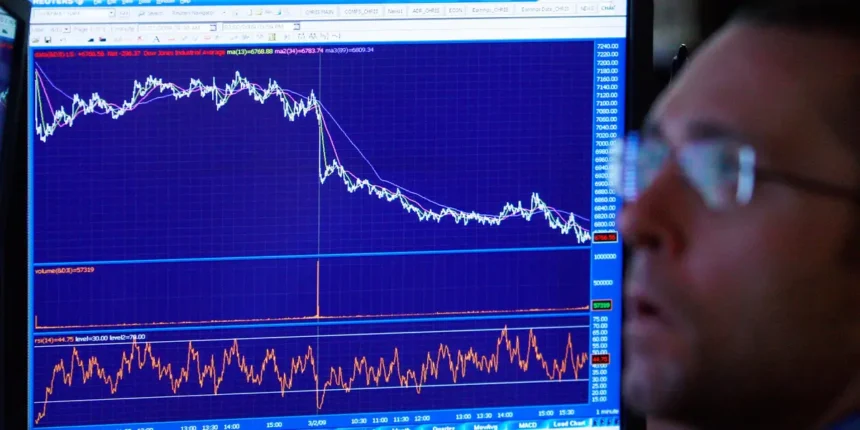
A recent analysis by Ned Davis Research has raised concerns for investors regarding the S&P 500 index, particularly in light of the ongoing conflict in Iran. The analysis highlights multiple trend indicators that are either nearing or already indicating a sell signal, suggesting that further losses could be on the horizon for the index, which has already seen an 8% decline since the escalation of the conflict in late February.
London Stockton, a research analyst at NDR, noted in a client communication that the prevailing trend evidence appears increasingly bearish. He emphasized that most major models have shifted to a negative outlook. Three specific indicators have drawn Stockton’s attention as potential harbingers of additional market downturns.
First, the S&P 500 has recently reversed from its highs, ending last week down 9% from its previous peak. Historical analysis suggests that when the index drops by at least 7.2% from its recent high, it typically serves as a sell signal for investors. Stockton advised shifting investments from the S&P 500 into commercial paper, or short-term corporate bonds, which have historically served as effective stop-loss measures when markets are poised for further decline.
Second, the S&P 500 is approaching what is known as a “death cross.” This technical indicator occurs when the index’s 50-day moving average falls below its 200-day moving average. While this crossover has not yet taken place, the 50-day moving average is inching closer to crossing under the 200-day moving average. Stockton indicated that, absent a significant market recovery, the likelihood of this event occurring is increasing. He cautioned that while stocks can often rebound quickly after a death cross signal, this particular indicator is more suitable for warning about prolonged downturns, as observed during major market corrections in 2009 and 2022.
Lastly, the analysis revealed a troubling trend in market volume. Declining demand for the S&P 500 is coupled with increasing supply, indicating that seller interest is growing while buying interest wanes. The volume spread between demand and supply was recorded at approximately 1.25 on Friday. If this spread falls below 0.8, it would signal a recommendation to shift investments from stocks to Treasury bonds, marking a significant bearish outlook.
These combined indicators serve as a cautionary tale for investors, who may want to adopt a more defensive investment strategy amidst the tumultuous market conditions spurred by geopolitical instability.