US stock futures were largely unchanged on Monday night, following a significant pullback on Wall Street. The S&P 500 index is now nearing technical correction territory, putting it alongside the Dow Jones Industrial Average and the Nasdaq. Futures contracts for the S&P 500 and Dow were relatively flat, while Nasdaq 100 futures dipped by 0.1%.
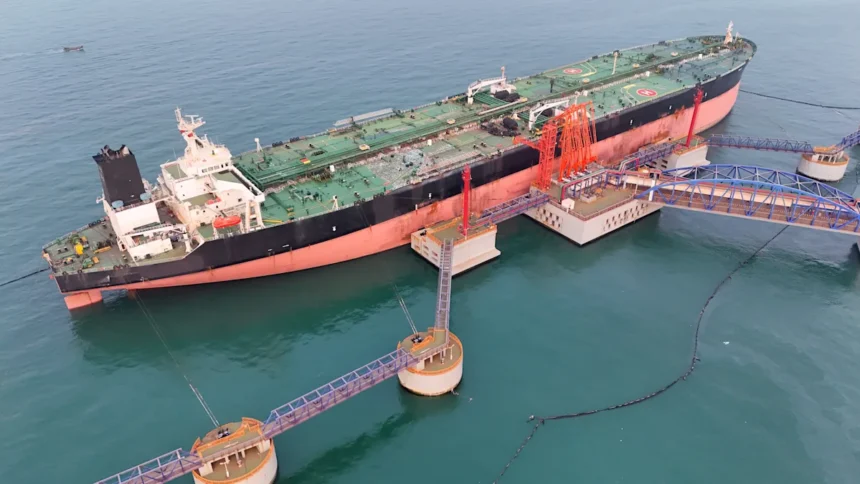
Investor sentiment took a hit on Monday, largely due to rising geopolitical tensions. The CBOE Volatility Index, known as the market’s “fear gauge,” has consistently stayed above 30, indicating heightened anxiety among investors. In tandem, oil prices surged, with the US benchmark, West Texas Intermediate crude, closing above $100 per barrel for the first time since 2022. This increase comes amid ongoing conflict related to the US-Israeli war against Iran, which is now in its fifth week.
Market participants are closely monitoring the situation, particularly for any signs of de-escalation. Communications from Washington appear inconsistent; while some US leaders have suggested advancements in diplomatic talks, former President Trump has raised the possibility of the US taking control of Iranian oil supplies.
On the monetary policy side, Federal Reserve Chair Jerome Powell reassured the markets by stating there is minimal risk of contagion in private credit markets. He suggested that inflationary pressures are currently manageable, indicating no immediate necessity for additional interest rate hikes.
Looking ahead, investors are preparing for upcoming economic data, particularly the consumer confidence report for March and February’s Job Openings and Labor Turnover Survey (JOLTS), both of which are expected to yield important insights into the state of the US economy.