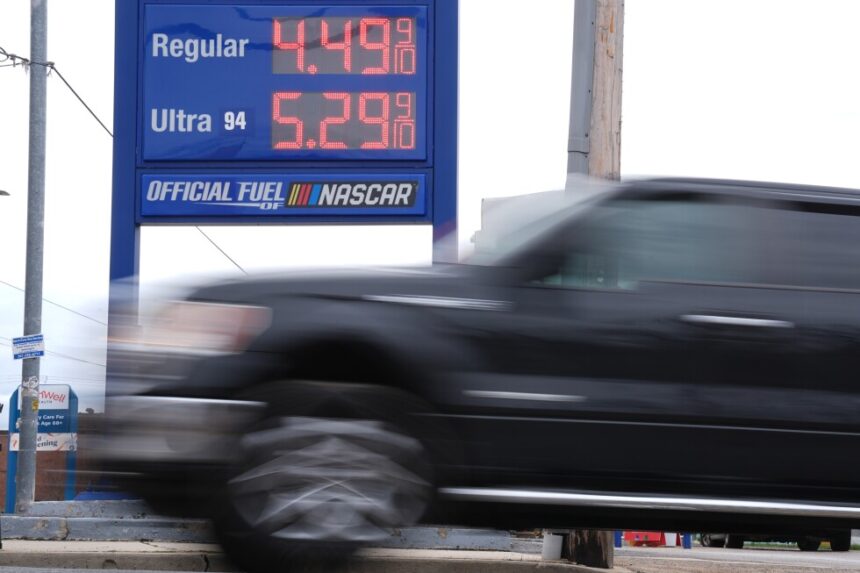
U.S. gas prices have surged past an average of $4 a gallon for the first time since 2022, driven by the ongoing conflict in Iran that has led to a spike in fuel prices globally. According to the motor club AAA, the current national average for a gallon of regular gasoline is now $4.02, reflecting an increase of over a dollar compared to pre-war levels. This marks the highest prices at the pump since nearly four years ago, following Russia’s invasion of Ukraine.
Regional disparities also exist, with some states already facing significantly higher prices, influenced by local supply dynamics and varying tax rates. Since the joint military operations by the U.S. and Israel against Iran began on February 28, the cost of crude oil—the primary component in gasoline—has seen rapid fluctuations. This turmoil has resulted in deep supply chain disruptions and production cuts from major oil producers in the Middle East.
The rising gas prices are straining consumers and businesses alike, exacerbating the cost of living challenges many households face. Increased fuel costs could force families to reallocate their budgets, impacting discretionary spending in other areas. In particular, the grocery sector is expected to feel the pinch, as businesses may need to raise prices to cover the increasing costs of transportation. The United Postal Service has indicated that it will seek an additional temporary charge of 8% on some of its popular shipping services, including Priority Mail.
Diesel fuel has also seen a dramatic rise in price, averaging $5.45 a gallon—up from approximately $3.76 before the conflict began. The potential for prices to escalate further looms large if the conflict continues, with significant disruptions reported in the Strait of Hormuz, a crucial transit point for nearly one-fifth of the world’s oil supply. Ongoing attacks on oil and gas facilities by Iran, Israel, and the U.S. are compounding these supply issues.
In an effort to mitigate the rising prices, the International Energy Agency has announced plans to release 400 million barrels of oil from emergency stockpiles held by member nations, including the U.S. Additionally, the Trump administration had previously downplayed the need for reserve oil but has since lifted certain sanctions targeting Venezuelan and, temporarily, Russian oil. The Biden administration is also waiving maritime shipping requirements under the Jones Act for a period of 60 days to further facilitate supply.
Despite these potential relief efforts, it remains uncertain how quickly and effectively they will benefit consumers. Refineries typically purchase crude oil in advance, which means that many are still working with older supplies at higher costs, and it will take time for any new supplies to reach the market. Seasonal trends also contribute to pricing dynamics, as gas prices typically rise during this time of year due to increased road travel and the shift to more costly summer fuel blends.
While the U.S. has become a net oil exporter, it remains susceptible to fluctuations in global oil prices. Oil is a globally traded commodity, and although most U.S. production is light, sweet crude, the refineries on the East and West coasts are mainly optimized for heavier, sour crude, necessitating some imports. Historical data suggests that geopolitical tensions have previously disrupted oil flows, resulting in significant price spikes. For instance, after the onset of the Ukraine conflict in June 2022, the average price for regular gasoline hit a staggering $5 per gallon—an all-time high. Prices have since fluctuated, but before the recent spike, the national average had remained below the $4 mark since mid-August of 2022.