Oil prices experienced a dramatic decline on Wednesday as stock markets around the globe marked significant gains following remarks from Donald Trump regarding the war in Iran. Brent crude, the international oil benchmark, fell sharply to $99.78 per barrel, representing a drop of over 15% from the previous day’s pricing—its lowest point in a week.
The bearish trend in oil prices prompted a rally in stock markets throughout Asia, particularly benefiting economies highly reliant on oil and gas supplies from the Gulf region. Japan’s Nikkei index soared by 5%, while South Korea’s Kospi saw an impressive jump of 8%. Additional gains were observed across other markets, with Hong Kong’s Hang Seng rising by 2% and China’s CSI 300 index appreciating by 1.7%.
European markets followed suit, with the UK’s FTSE 100 index opening up 1.8% in early trading. The broader Europe Stoxx 600 index, which encompasses the largest firms across the continent, climbed by 2.2%.
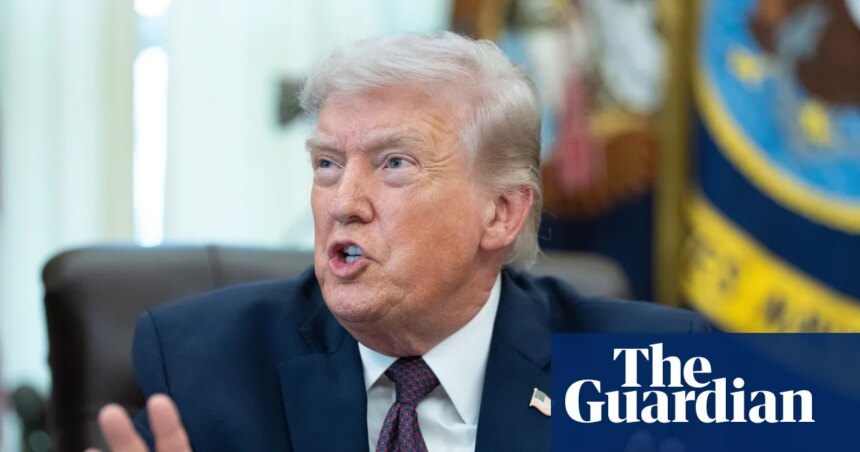
The catalyst for the market movements was Trump’s declaration regarding the ongoing conflict in Iran. During a statement made on Tuesday, he suggested that the situation would conclude within “two weeks or maybe a few days longer,” expressing a desire to decisively diminish Iran’s military capabilities.
These comments spurred a relief rally in the US stock market as well, with the S&P 500 index experiencing a surge of 2.9%. Trump is scheduled to deliver an address to the nation at 9 pm ET on Wednesday, further drawing attention to his administration’s outlook on the conflict.
Emma Wall, chief investment strategist at Hargreaves Lansdown, commented on the markets’ reaction to Trump’s optimism. She noted that investors appeared to interpret the president’s remarks as a signal of a potential withdrawal from the region, despite no formal agreements being reached with Iran. Wall cautioned, however, that while this optimism might provide a temporary boost to stocks, ongoing energy disruptions could continue to affect inflation and economic growth for an extended period.
In the UK, traders adjusted their expectations regarding interest rate increases. Money markets began to price in about 41 basis points worth of increases to the UK bank rate by the end of 2026, indicating a shift in investor sentiment away from the previously anticipated two quarter-point hikes before the year’s end. Just the day before, the markets were projecting 66 basis points in rate increases by Christmas.
Amidst these shifts, the price of gold, which had risen sharply by 3.5% on Tuesday, continued its upward trajectory with an additional gain of 0.8% on Wednesday, reaching a level of over $4,700 an ounce—marking its highest level in almost two weeks.