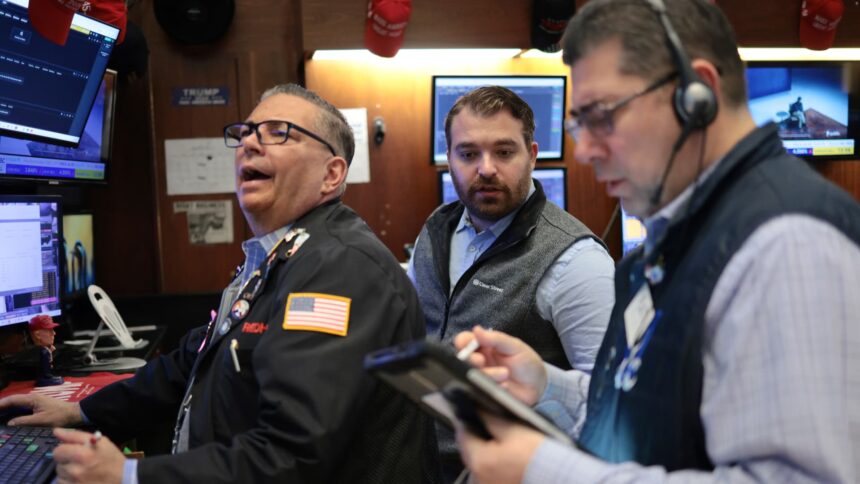
U.S. stock futures experienced a decline on Thursday morning, reflecting market reactions to President Donald Trump’s recent address regarding the ongoing conflict in Iran. S&P 500 futures fell by 1.15%, and Nasdaq 100 futures dropped by 1.5%. Additionally, futures linked to the Dow Jones Industrial Average decreased by 447 points, a decline of approximately 0.96%.
In his Wednesday night address, Trump provided updates on the Middle East situation. While he mentioned that the U.S. is “getting very close” to concluding the Iran war, he also warned that the United States would respond to Tehran “extremely hard.” He asserted, “Over the next two to three weeks, we’re going to bring them back to the stone ages where they belong.” This statement coincided with a downturn in stock futures and a notable rise in oil prices. West Texas Intermediate crude futures increased by 6.38% to $106.51 per barrel, while Brent crude futures rose by 6.3%, reaching $107.87.
Earlier in the week, markets had shown optimism when all three major indexes experienced gains during regular trading. The S&P 500 rose by 0.72%, the Nasdaq Composite saw an uptick of 1.16%, and the Dow added 224.23 points, or 0.48%. This optimism stemmed from hopes that the U.S.-Iran conflict was nearing resolution.
In a post on Truth Social before his address, Trump indicated that Iran’s president had proposed a ceasefire. However, Trump stated that the U.S. would only consider the request once the Strait of Hormuz was “open, free, and clear.” This development followed his comments made to reporters at the White House on Tuesday, where he expressed an expectation that U.S. military forces would exit Iran within two to three weeks.
Market analysts are increasingly cautious as they assess the broader economic implications of these developments. Sebastien Page, head of global multi-asset at T. Rowe Price, noted on CNBC, “We don’t know how long this is going to last, but as market participants, we need to understand the damage that has already been done.” He also emphasized the challenges of stabilizing inflation, suggesting that the economic recovery might take longer than anticipated. “You have this background of still a robust economy, but you have to worry you’re on the knife’s edge for a growth shock,” he added.
As Thursday marks the last trading day of the shortened week, with markets closing for Good Friday, traders are also keeping an eye on initial jobless claims for the week ending March 28. The labor market’s health will be further scrutinized with the release of the jobs report scheduled for Friday morning.