US stocks experienced a volatile morning on Thursday, initially rebounding sharply before declining again amid geopolitical tensions surrounding Iran. The sharp movements in the market followed an announcement by Iran’s deputy foreign minister that the country was developing a traffic management protocol for vessels transiting the crucial Strait of Hormuz in partnership with Oman. This news briefly lifted the S&P 500, Dow Jones Industrial Average, and Nasdaq Composite, which had all opened significantly lower due to heightened concerns about the US-Israeli military actions against Iran.
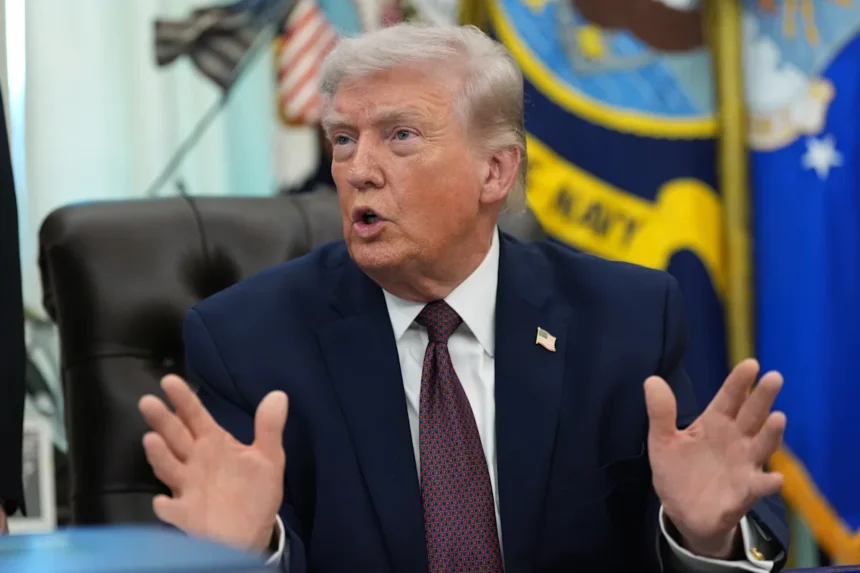
President Donald Trump’s recent address to the nation failed to alleviate investor anxiety as he pledged to “hit Iran hard” and reiterated intentions to send the country “back to the Stone Age.” His statements suggested an escalation of US military operations, with a potential withdrawal timeframe of two to three weeks, leaving investors unsettled about the future of the conflict and its impact on global markets.
Concerns surrounding the ongoing war have notably influenced oil prices and broader market sentiment. Brent crude has surged approximately 50% since the conflict began in late February, although a temporary pullback in oil prices earlier this week had offered a glimmer of optimism. Following Trump’s speech, West Texas Intermediate (WTI) crude prices leaped by 10% to trade above $110 a barrel, while Brent prices shot up by 6% to exceed $107.
The volatile trading day was further underscored by conflicting economic indicators. Initial jobless claims data showed a drop of 9,000, falling to 202,000 for the week ending March 28, suggesting a potential strength in the labor market ahead of the highly anticipated jobs report due out on Friday.
In corporate news, Ford Motor Co. saw its shares decline by about 1.2% after reporting a nearly 9% year-over-year drop in first-quarter sales, including a significant 16% decrease in sales of its F-series trucks, which are the best-selling vehicles in the US.
Tech stocks initially lagged but later turned positive due to the buoyancy from the Hormuz headlines. The large-cap tech sector managed to make up some ground after spending much of the morning in the red. Software stocks in particular showed resilience, while semiconductor equities continued grappling with earlier losses.
Blue Owl Capital’s shares fell 1.3% in late morning trading after the firm experienced a surge of withdrawal requests from two of its non-traded funds, reflecting potential liquidity concerns among investors.
About the markets’ abrupt shifts, analysts noted that the geopolitical situation in the Strait of Hormuz is crucial for energy stability. As investors reacted to the possibility of a less chaotic situation in the strait, stocks seemed to momentarily recover from their lows. However, the choppy trading pattern underscores an ongoing sensitivity to geopolitical developments, with energy prices continuing to reflect the uncertainty tied to Iran.
In a notable merger, Bed Bath & Beyond announced plans to acquire The Container Store for $150 million, but the news was met with skepticism from investors as Bed Bath & Beyond’s shares dropped 6%. CEO Marcus Lemonis touted the acquisition as a vital strategy to bolster the company’s long-term plans, which include pursuing further acquisitions to strengthen its market position following its own emergence from bankruptcy.
Overall, Thursday marked a day fraught with tension and turbulence in US markets, as traders navigated through a mix of geopolitical unease and economic signals that could shape market dynamics in the weeks ahead.