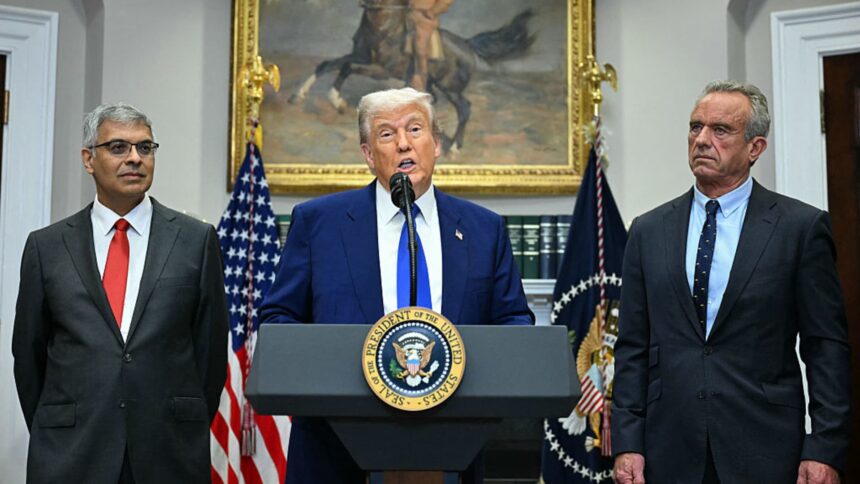
The Trump administration is gearing up to introduce new tariffs on branded pharmaceuticals from companies that have not reached agreements to lower their drug prices in the United States, according to information obtained by CNBC. The proposed tariffs would impose a staggering 100% levy on patented medications and their active ingredients.
The initiative, still in draft form, aims to create incentives for pharmaceutical companies to either relocate their manufacturing processes to the U.S. or actively negotiate pricing deals with the government. If companies engage with the administration or move their production stateside, they may reduce or altogether avoid these tariffs.
Although the timeline for a formal announcement remains uncertain, there are indications that it could come as soon as Thursday. This proposed measure represents yet another evolution in Trump’s aggressive trade approach, occurring over a month after the Supreme Court nullified the global tariffs he had instituted in 2025, which did not include the pharmaceutical sector.
Since November, numerous major drug manufacturers, such as Eli Lilly, Pfizer, and Novo Nordisk, have solidified agreements with the Trump administration to bring down the prices of both new and existing medications. These arrangements align with the president’s “most favored nation” policy, which ensures U.S. drug prices are comparable to lower prices found abroad. Moreover, these companies have received a three-year exemption from tariffs.
Under the currently drafted proposal, companies that are either completing agreements or currently negotiating with the Department of Health and Human Services would be exempt from the new tariffs. The plan also outlines a 20% tariff on companies planning to onshore their production, with this rate set to escalate to 100% over a four-year duration.
Specific tariff rates would also apply based on bilateral agreements with the European Union, Japan, South Korea, Switzerland, and the U.K., while generic drugs would face no additional tariffs.
This latest move follows a Commerce Department investigation that identified certain pharmaceutical imports as presenting a national security concern for the United States. Prior to these significant drug pricing agreements, Trump had consistently threatened tariffs on pharmaceutical imports, contributing to renewed investments in domestic drug manufacturing—a sector that had seen a notable decline.
Bloomberg was the first to report on the impending pharmaceutical tariffs, and this development continues to unfold as the pharmaceutical industry adapts to a rapidly evolving regulatory landscape.