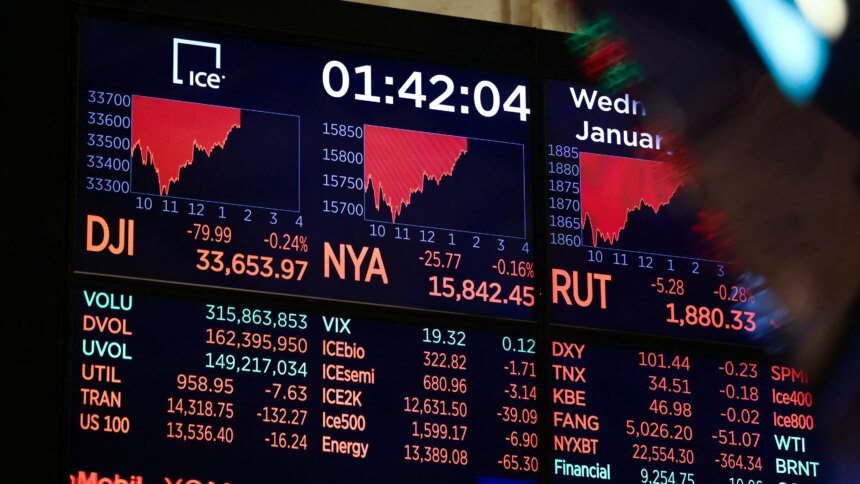
The stock market experienced significant turbulence on April 2, 2026, following President Donald Trump’s national address regarding the ongoing conflict in Iran. Early trading saw Nasdaq futures plummet by 1.9%, with the S&P 500 and Dow Jones Industrial Average also reflecting sharp declines of 1.5% and 1.4%, respectively.
However, as the morning progressed, the market appeared to stabilize. By 10:30 a.m., the S&P 500 had managed to bounce back to even, while the Dow Jones was down just 0.12% and the Nasdaq slightly declined by 0.16%. This recovery came amid heightened concerns over geopolitical instability and its economic implications.
In stark contrast to the fluctuating stock prices, crude oil prices surged dramatically. West Texas Intermediate crude rose by 13%, surpassing $113 per barrel. This increase continued a trend that saw oil prices rise from approximately $76.91 per barrel a month ago, marking the highest level since 2024.
The market’s response followed a pivotal address by President Trump on April 1, where he suggested that the ongoing war with Iran could come to a close soon. He noted that recent military actions, which escalated since the conflict began on February 28 with joint attacks by the U.S. and Israel, would be intensified over the next few weeks. “I can say tonight that we are on track to complete all of America’s military objectives shortly,” Trump stated, emphasizing a commitment to “hit them extremely hard over the next two to three weeks” and asserting the goal of bringing Iran back to “the Stone Ages where they belong.”
Despite these assertions from the administration, rising gas prices—exceeding $4 per gallon in certain areas—combined with expert warnings about potential global recession linked to the conflict, have left many investors wary. As the geopolitical climate remains uncertain, market participants are closely monitoring developments, hesitant to fully engage until an official resolution of the conflict is declared.