U.S. stocks experienced fluctuations on Thursday, ultimately reducing early losses after Iran’s deputy foreign minister revealed that the country was collaborating with Oman to draft a protocol aimed at regulating traffic through the strategically vital Strait of Hormuz. The Dow Jones Industrial Average fell by 0.4% after initially dropping more than 1%, while the S&P 500 slipped 0.2%, and the tech-focused Nasdaq Composite experienced a decrease of about 0.3%.
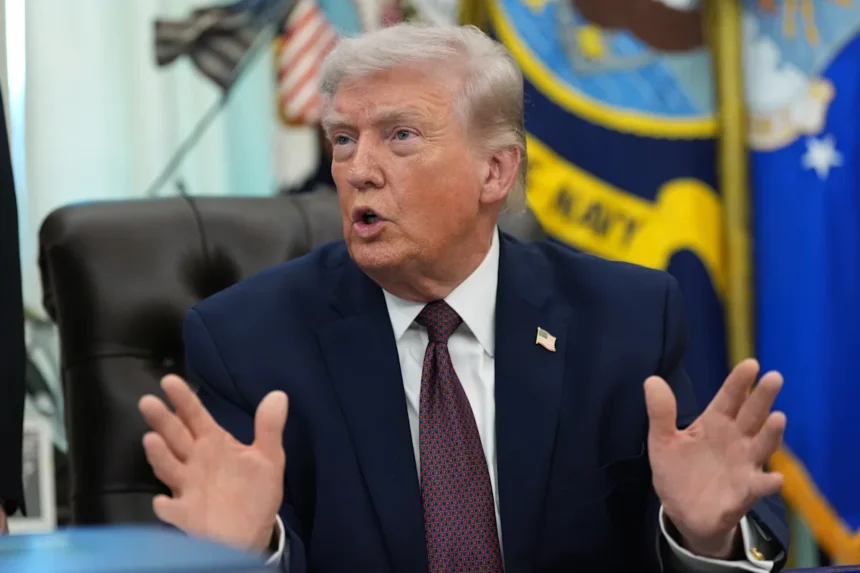
The downward trend began earlier in the day following President Trump’s aggressive remarks, where he threatened to “hit Iran hard” in an address regarding the ongoing U.S.-Israeli conflict involving Iran. This speech did not provide clarity on a timeline for U.S. military involvement, instead indicating a potential escalation before a possible withdrawal within two to three weeks.
Investor sentiment has been consistently shaken in light of the U.S.-Israeli tensions with Iran; the state of the Strait of Hormuz is particularly significant due to its impact on global energy markets. Reports from Iran suggested that discussions between Iran and Oman about the management of the strait led to a brief spike in stock prices, indicating a glimmer of hope for energy market stability.
Brent crude prices have soared by approximately 50% since the conflict escalated in late February. In the aftermath of Trump’s address, U.S. benchmark West Texas Intermediate crude surged by 10%, trading above $110 per barrel, while Brent crude jumped by 6%, reaching over $107.
Thursday represented the final trading day of the holiday-shortened week in advance of the Good Friday closure. Initial jobless claims data released showed a decrease of 9,000 claims, landing at 202,000 for the week ending March 28, which sparked interest as the job market continues to evolve. The widely anticipated March jobs report is set to be disclosed on Friday.
Airlines suffered from the rising oil prices, contributing to their market struggles. Jet fuel costs have surged more than 100% recently, leading major U.S. carriers—including American Airlines, United Airlines, and Delta Air Lines—to experience stock drops of over 3% and nearly 2%, respectively. Regional carriers like Alaska Air Group and Southwest Airlines likewise faced declines. Analysts attributed the heightened jet fuel prices to disruptions in energy supplies caused by the conflict in the Middle East, which has forced Asian refiners to reduce output.
Meanwhile, gold and silver prices faced declines as fears regarding inflation grew. Gold futures decreased by over 2%, snapping a three-day winning streak, while silver prices fell by 4%, reflecting a broader downturn for precious metals amid rising oil prices and an uptick in the U.S. dollar index.
In corporate news, Ford’s stock saw a decline of approximately 1.2% after reporting first-quarter sales down by 9% compared to the previous year, with F-series truck sales—America’s best-selling vehicle—dropping by 16%.
Despite technical challenges, large-cap technology stocks managed a small recovery, largely due to the positive implications of the Hormuz news. Software stocks saw gains while semiconductor shares worked to recover from earlier losses.
Blue Owl’s shares plummeted by 1.3% in late morning trading as the private debt manager reported a significant wave of withdrawal requests from two of its non-traded funds, raising investor concerns.
The stock market shifted sharply on the Hormuz developments, with major indexes briefly reversing their earlier losses. The optimism lay in the potential reduction of geopolitical risk tied to the strait, traditionally seen as a bellwether for energy prices.
Shares of Bed Bath & Beyond fell by 6% after the retailer announced plans to acquire The Container Store and related entities in a $150 million deal. The CEO claimed the acquisition was a strategic move for the company’s growth amidst a challenging retail environment.
The overall trading session reflected the turbulent climate in financial markets influenced by geopolitical concerns, fluctuating energy prices, and corporate earnings reports. As the week comes to a close, market observers are eagerly awaiting further economic data and the ongoing developments regarding the conflict affecting investor sentiment.