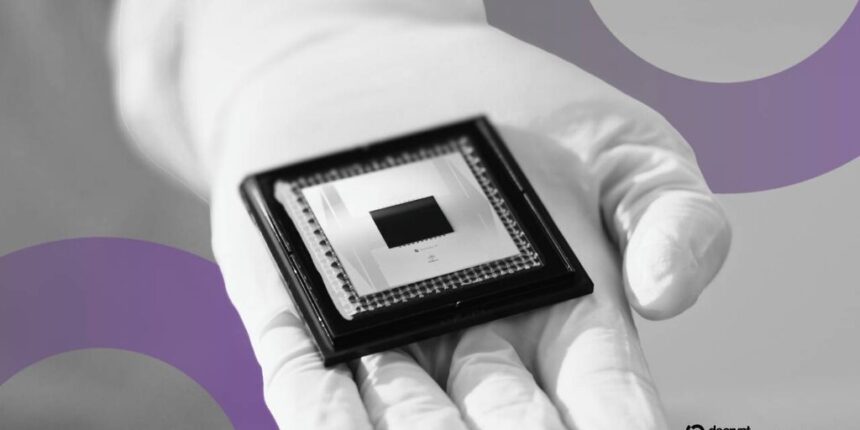
Researchers at the California Institute of Technology have made significant advancements indicating that quantum computers may only need between 10,000 and 20,000 qubits to break modern cryptographic systems. This study, conducted in collaboration with Oratomic—a quantum computing startup co-founded by Caltech researchers—introduces a novel error-correction mechanism for neutral-atom quantum computers. This breakthrough could facilitate the running of Shor’s algorithm, which has the potential to compromise widely used encryption methods, particularly those relevant to cryptocurrencies like Bitcoin.
Dolev Bluvstein, co-founder and CEO of Oratomic and a visiting associate in physics at Caltech, highlighted the acceleration in quantum computing capabilities. “People are used to hearing that quantum computers are always 10 years away,” he remarked. This statement reflects a notable shift in perspective from just over a decade ago, when the consensus was that executing Shor’s algorithm would require around one billion qubits, while contemporary lab systems had only achieved around five qubits.
Today’s prevalent error-correction systems typically necessitate approximately 1,000 physical qubits to generate a single reliable logical qubit, creating substantial overhead that has pushed practical fault-tolerant quantum systems into the million-qubit range. This delay impedes the development of devices capable of executing algorithms that could undermine both RSA and elliptic-curve cryptography, foundational to Bitcoin and Ethereum.
However, Bluvstein noted that many current lab systems are nearing or surpassing 6,000 physical qubits, indicating that the timeline for cryptographic threats is much tighter than previously assumed. “You can really see the increase in system size and controllability, even as the required system size continues to decrease,” he explained.
Significantly, researchers from Caltech recently showcased a neutral-atom quantum computer operating with 6,100 qubits that achieved an impressive 99.98% accuracy with coherence times of 13 seconds. This milestone not only positions them closer to developing error-corrected quantum machines but also raises alarms about the impending risks to Bitcoin from Shor’s algorithm.
In light of these developments, governments and tech firms are beginning to transition to post-quantum cryptography designed to withstand potential quantum attacks. Yet experts warn of substantial engineering challenges ahead, particularly in scaling quantum systems while keeping error rates minimal. Bluvstein cautioned that while the achievement of 10,000 physical qubits may be on the horizon, reaching this goal involves complex and intricate work.
As this research unfolds, Google has also reported findings emphasizing that future quantum computers could compromise elliptic curve cryptography with even fewer resources than initially anticipated, heightening the urgency for adopting post-quantum cryptography before these machines enter the mainstream.
Beyond the cryptocurrency sector, the quantum risk extends throughout the entire digital landscape, affecting a vast array of technologies from Internet of Things devices to digital communications and satellites. Bluvstein underscored the necessity for a comprehensive overhaul of the digital infrastructure in the face of these impending threats.