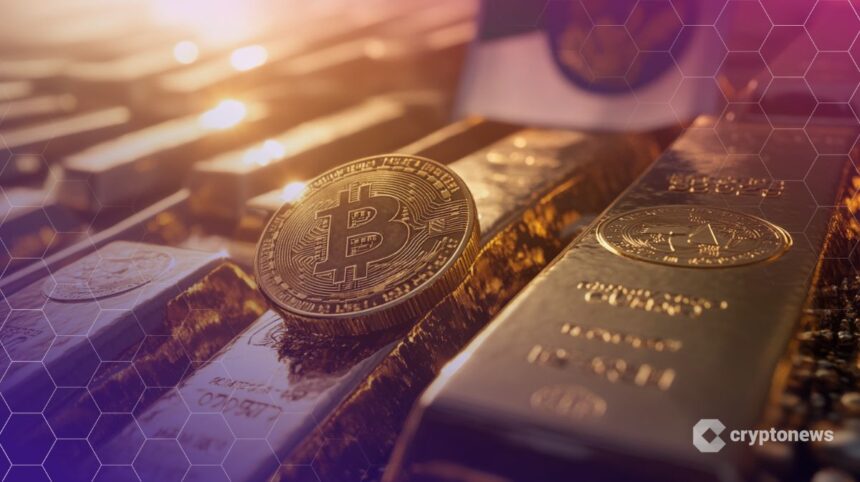
The Central Reserve Bank of El Salvador has made headlines following its recent acquisition of 13,999 troy ounces of gold, valued at $207.4 million. This marks the nation’s first purchase of precious metals since 1990, signifying a strategic shift in how the country is managing its international reserves. This move aligns with the bank’s response to shifting economic conditions and guidance from the International Monetary Fund (IMF), amid a confirmed pause in its Bitcoin accumulation strategy.
The acquisition boosts the bank’s holdings from 44,106 to 58,105 troy ounces. The decision to invest in gold was influenced by the IMF’s guidance, which came after the organization confirmed that El Salvador halted its Bitcoin purchases in February 2025. President Nayib Bukele’s prior ambition of making daily Bitcoin purchases has been curtailed, with the IMF’s review in July indicating no new state-backed Bitcoin acquisitions since the pause. Instead, movements in Bitcoin on-chain activities have been attributed to internal transfers rather than new purchases.
El Salvador’s recent gold acquisition is part of a broader strategy to diversify its international reserves. Gold accounts for roughly 20% of the total reserves held by global central banks, positioning it second only to dollar-denominated assets. Over the past three years, various central banks have collectively purchased over 1,000 tons of gold annually, which substantiates the global trend toward precious metals as secure storehouses of value.
Under President Bukele’s administration, the enhancement of the Central Reserve Bank’s assets has coincided with improved macroeconomic stability. Gold is being recognized universally as a strategic asset, vital for ensuring diversified and secure long-term reserves for the nation. Despite changes in its Bitcoin strategy, El Salvador still holds about 6,244 BTC, currently valued at approximately $742 million, maintaining profitable gains of 127% based on its average acquisition price of $46,000 per Bitcoin.
In January 2025, significant legislative amendments were approved by Congress, eliminating the previous mandate for businesses to accept Bitcoin, reflecting a response to IMF pressures. The reforms were quickly passed, with legislation receiving a vote of 55-2 shortly after Bukele introduced the bill. While Bitcoin retains its status as legal tender in the country, the IMF has encouraged El Salvador to treat cryptocurrency as a financial asset rather than a currency.
In the wake of these reforms, the previously government-operated Chivo wallet will be privatized, relieving public finances from its operational burden while still ensuring it operates effectively under private control.
Compounding these developments is the recent decision to split El Salvador’s Bitcoin treasury across 14 separate addresses, a proactive measure aimed at enhancing security against potential future threats posed by quantum computing. With advancements in quantum technology potentially jeopardizing the cryptographic security fundamental to Bitcoin, officials are taking preemptive steps to mitigate vulnerabilities.
Cybersecurity specialists have highlighted that approximately 30% of Bitcoin’s circulating supply remains exposed due to legacy address formats susceptible to quantum threats. Concerns are also emerging about the potential for adversaries to collect encrypted data in anticipation of future quantum decryption capabilities.
In line with its goal of advancing its crypto adoption, El Salvador has proposed a series of cross-border regulatory sandbox programs in collaboration with the SEC. These initiatives are focused on real estate tokenization and capital raising pilots, designed to yield practical data regarding token classification and custody solutions within U.S. regulations.
The National Commission on Digital Assets in El Salvador is spearheading efforts to implement tokenization projects across diverse asset classes, potentially providing valuable insights that could influence U.S. regulations regarding digital assets.