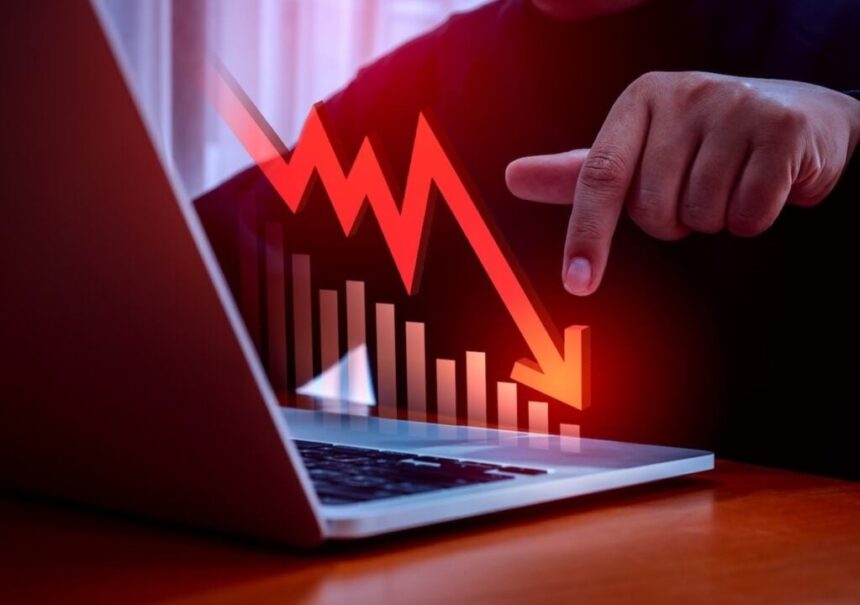
In a recent warning to his followers, Robert Kiyosaki, the author of “Rich Dad Poor Dad,” expressed concerns over a potential collapse of the global stock market. He cited recent market fluctuations in Asia as evidence that traditional investments like stocks and bonds may not offer the stability investors expect during times of geopolitical unrest.
On March 4, Kiyosaki took to Facebook to alert his audience, declaring, “THE GLOBAL STOCK MARKET IS COLLAPSING.” He specifically called attention to a historic sell-off in South Korea, where the KOSPI index plummeted by 12% in just one day—marking its worst decline on record. This drop exceeded the losses observed during major financial crises, including the events of 9/11 and the 2008 financial collapse.
Kiyosaki noted that just five days prior, South Korea’s KOSPI had been deemed the “world’s hottest market,” having gained 45% over a two-month period and prompting optimistic projections from analysts at major firms like JPMorgan and Nomura. However, escalating tensions in the Middle East, particularly the impact of Iran’s actions in the Strait of Hormuz—which carries about one-fifth of the world’s oil supply—triggered this dramatic market downturn. This situation poses a significant threat to South Korea’s oil-dependent economy.
The fallout was severe enough to halt trading on the Seoul exchange due to circuit breakers, with major companies like Samsung Electronics and SK Hynix witnessing substantial losses of 12% and 10% respectively. Kiyosaki used this situation to underscore the fragility of financial markets that rely heavily on “paper assets,” which he argues are susceptible to geopolitical upheaval.
He emphasized that the recent declines were not isolated to South Korea; other major indices also fell sharply. Japan’s Nikkei index dropped more than 3.6%, Germany’s DAX decreased by 3.4%, and the Dow Jones Industrial Average fell 1,200 points at its lowest point during that session. The impact was significant, wiping trillions of dollars in market value over a short period.
Kiyosaki’s financial philosophy revolves around a deep-seated distrust of what he terms “paper assets,” such as stocks, bonds, and retirement accounts. He believes these are mere promises from corporations and governments that fail to hold up during times of crisis. “Promises break during wars,” he cautioned, advocating for a move towards “real assets,” such as gold, silver, and cryptocurrencies.
Interestingly, while traditional markets floundered, Kiyosaki pointed out Bitcoin’s resilience. The cryptocurrency surged to $71,000, rebounding by 6.5% within a single day. This uptick even led to the liquidation of $320 million in short positions as traders betting against Bitcoin faced sudden losses. Kiyosaki argued that unlike traditional stocks, Bitcoin is not governed by market-specific fears, as it has no centralized leadership or geopolitical vulnerabilities.
Kiyosaki encouraged his followers to view market downturns as opportunities for investment. “The rich don’t celebrate crashes. But they DO prepare for them,” he noted, suggesting that financially savvy individuals take advantage of the panic selling that typically occurs.
In light of these events, Kiyosaki is once again urging his following to diversify their investments away from traditional markets and into assets that are not susceptible to government manipulation or geopolitical conflict. He identified gold, silver, and Bitcoin as preferred investment options that maintain intrinsic value in tumultuous times.
The recent volatility in global equity markets, particularly the dramatic events in Asia, illustrates the interconnectedness of economies and how localized conflicts can send shockwaves throughout international trading systems. Kiyosaki’s insights are a clarion call for investors to reassess their strategies in a world marked by uncertainty and instability.