The ongoing conflict with Iran is significantly impacting the U.S. housing market, contributing to rising home prices even as other trends might suggest favorable conditions for homebuyers this spring. Mortgage rates have experienced a troubling ascent since the onset of the war, driven largely by soaring energy prices that have raised concerns over inflation. This economic anxiety has pushed yields on U.S. 10-year Treasury bonds upward, which in turn affects the rates lenders set for home loans. Notably, the average rate for a 30-year mortgage, which had dipped to just below 6% in late February—its lowest point in over three years—has now surged to 6.46%, marking its highest level in nearly seven months.
The war is compounding existing uncertainties in the U.S. economic landscape, which was already experiencing a sputtering job market. Although mortgage rates currently remain lower than they were a year ago, their recent rise has caused a noticeable slowdown in mortgage applications. As a result, this spring may yield lower home sales compared to the typically busy selling season.
Joel Berner, a senior economist at Realtor.com, commented on the situation, stating, “The war in Iran has seriously complicated the spring buying season.” He anticipates that many buyers may feel deterred by rising rates and increasing economic instability, leading them to postpone their purchasing decisions.
For those home shoppers still in a position to buy, the current market presents more favorable conditions compared to last year. Increased inventory levels mean that buyers are now better equipped to negotiate. Real estate professionals have reported that many sellers are faced with homes lingering unsold for weeks, thereby incentivizing them to lower prices or provide concessions such as covering closing costs or making property repairs.
In specific regions like the Dallas-Fort Worth area, sellers are adjusting their expectations in response to the shifting market. Matthew Crites, an agent with Coldwell Banker Realty, noted that declining listing prices and an uptick in available homes are prompting many sellers to price competitively or offer attractive incentives to potential buyers.
This was the case for home shopper Anne King, who successfully negotiated a purchase on a three-bedroom ranch-style house listed at $275,000 in Fort Worth. She submitted an offer $10,000 below the asking price while also requesting $5,000 for closing costs. The seller accepted her offer and agreed to contribute another $12,000 for repairs identified during the home inspection.
With the threat of rising interest rates, King opted to buy sooner rather than risk large-scale competition leading to bidding wars, an experience she had encountered previously when buying a townhouse in Arlington, Texas. She locked in a 6% mortgage rate and expressed confidence that she secured a favorable deal on her new home.
Despite the national home inventory remaining low by historical standards, active listings surged nearly 8% in February compared to the previous year, according to Realtor.com data. This increase varied by region, with cities in the West, Midwest, and South experiencing the most significant jumps. As homes take longer to sell, a notable decline in median listing prices has occurred in a majority of the nation’s largest metropolitan areas.
According to a Redfin analysis, there were approximately 46% more sellers than buyers nationally in February, the widest gap recorded since 2013. Cities like Miami, Nashville, and Austin were highlighted as markets where sellers heavily outnumber buyers.
While the housing market has faced sluggish sales since 2022—due to rising mortgage rates from pandemic-era lows—many aspiring buyers still find affordability a formidable barrier. The median price of existing homes sold in February was reported at $398,000, nearly five times the median household income. This stark contrast demonstrates the ongoing affordability challenges homebuyers face.
Moreover, the recent uptick in mortgage rates adds to this challenge. For instance, monthly mortgage payments on a $400,000 home in downtown Dallas would rise from about $2,248 at a loan rate of 6% to $2,331 at 6.4%, even as current rates remain lower than those seen a year ago.
For sellers, the current market presents its own pressures. The dramatic cooling of the housing market over the past year has led to fewer multiple offers and, in many cases, prolonged selling times. Jo Chavez, a Redfin agent in Kansas City, advises sellers to have realistic expectations about their home’s sale potential, emphasizing the importance of competitively pricing their properties.
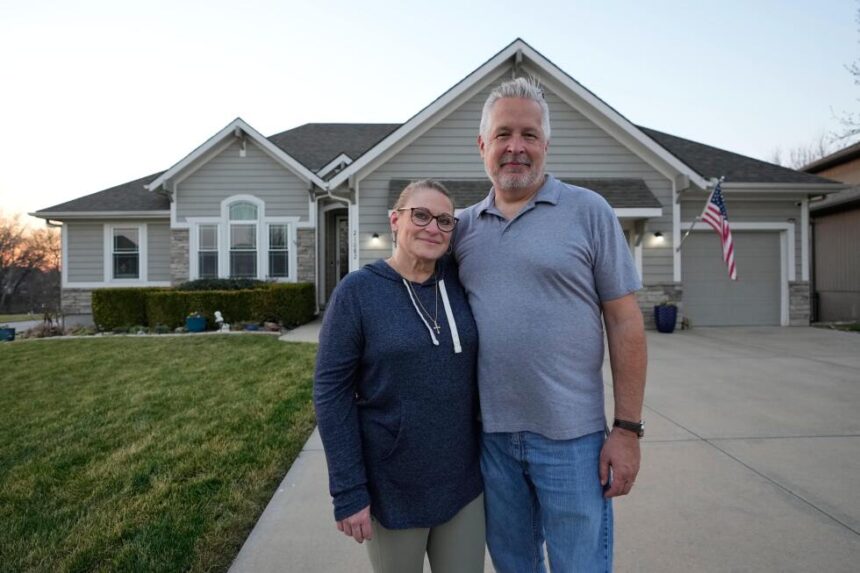
One example is the case of Gail and David Sanders, who listed their four-bedroom home in Olathe, Kansas. Despite lowering their asking price after hosting several open houses, they have yet to receive any offers. Their desire to relocate closer to family is on hold as they navigate a stagnant market. This scenario encapsulates the intricate dynamics currently shaping the housing landscape, where both buyers and sellers must adapt to fluctuating economic influences.