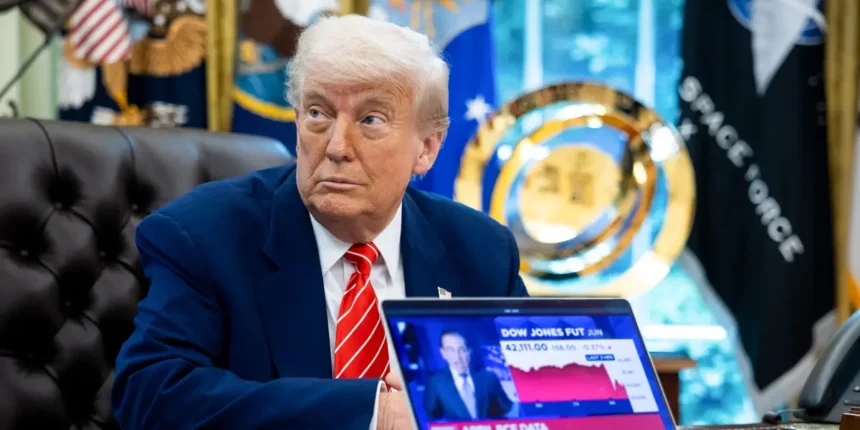
The financial landscape remains precarious, particularly in light of ongoing geopolitical tensions stemming from the Iran war, now entering its second month. Markets are in a state of heightened alert, with many investors watching closely to see how President Trump’s next moves will impact stock performance.
In a striking commentary, former JPMorgan quant chief Marko Kolanovic has posited a controversial strategy regarding the stock market and its correlation to U.S. foreign policy. Kolanovic suggests that Trump would be wise to allow the market to decline by ten percent or more, a move he believes would signal to Iran that the president is not beholden to stock market fluctuations. This perspective is rooted in the idea that demonstrating a willingness to endure short-term economic pain could lead to more favorable long-term outcomes in diplomatic negotiations. He articulated this viewpoint on social media platform X, asserting that a lack of concern for stock performance could expedite acceptance of a deal, even if it appears less favorable.
Kolanovic’s stance comes at a time when he and other market analysts are grappling with the impact of the war on global markets. His bearish outlook on the stock market reflects growing skepticism about the effectiveness of what he refers to as the “TACO trade,” historically tied to market rebounds following Trump’s policy pivots. He has expressed doubt that such short-term strategies will provide sustained relief this time around.
Further fueling Kolanovic’s critique was his recent commentary on Defense Secretary Pete Hegseth. According to a Financial Times report, Hegseth’s stockbroker attempted to invest in defense firms prior to the commencement of hostilities in Iran. This raises questions about the motivations and ethical considerations of government officials during a time of conflict, adding an additional layer of complexity to the current market climate.
Kolanovic concluded his argument by suggesting that avoiding “petty lies” to mitigate stock declines would ultimately be more beneficial in the longer term. By addressing the current oil supply deficit and the potential economic repercussions of ongoing conflicts, he advocates for a more straightforward and robust approach to both market management and foreign policy.
As investors continue to navigate this turbulent environment, the implications of Kolanovic’s insights will likely be a topic of ongoing debate among financial analysts and political commentators alike.