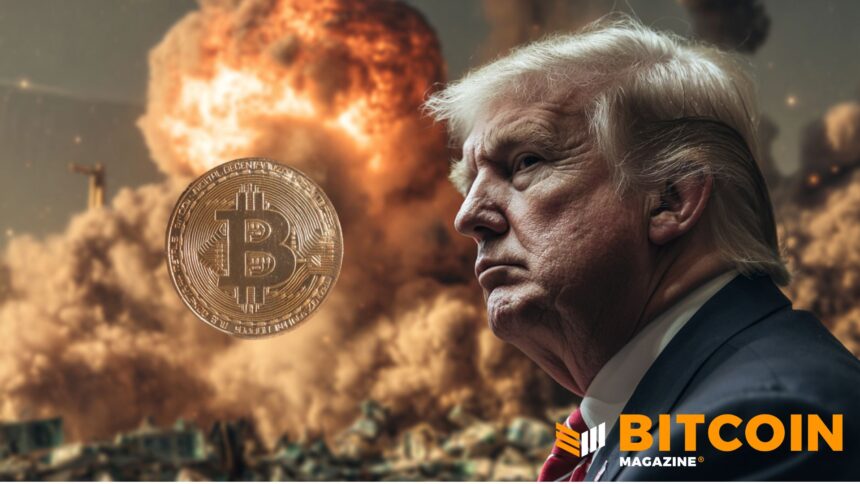
Bitcoin experienced a significant surge late Tuesday, climbing approximately 5% from its earlier trading range of $67,000 to $68,000, reaching an intraday high of $72,753. This rally followed a reduction in geopolitical tensions prompted by a surprise ceasefire announcement amidst U.S.-Iran negotiations.
The market reacted positively after former President Donald Trump announced he would suspend further military escalation against Iran for a period of two weeks, contingent upon Tehran’s agreement to reopen the strategically important Strait of Hormuz, a critical channel for global oil shipments. This announcement represented a stark departure from previous threats Trump had made regarding possible strikes on Iranian infrastructure if a deal was not achieved by an imposed deadline.
In a post on his platform Truth Social, Trump characterized the situation as a “double sided CEASEFIRE,” highlighting that the U.S. had “met and exceeded all Military objectives” and was approaching a broader agreement aimed at establishing long-term peace in the Middle East. He also mentioned the receipt of a 10-point proposal from Iran, which could potentially serve as a “workable basis” for negotiations, noting that many major points of contention had already been addressed.
Following the announcement, Bitcoin quickly broke its prior trading range, mirroring a broader shift in global risk sentiment among traders who began to factor in a reduced likelihood of further conflict in the region. The Strait of Hormuz has been critical in the ongoing tensions, with Iran’s blockade contributing to a rise in oil prices and heightened concerns about potential supply disruptions. Any news indicating a possible reopening of these shipping lanes carries substantial implications for global markets, affecting everything from energy sectors to equities and digital assets.
Reports suggest that the ceasefire proposal was facilitated, at least in part, by Pakistan, with Prime Minister Shehbaz Sharif playing a pivotal role in advocating for a pause in U.S. military action to allow for continued diplomatic efforts. Iranian officials expressed conditional support for the ceasefire, indicating that safe passage through the Strait could be permitted if hostilities ceased.
The movement in Bitcoin’s price illustrates its heightened sensitivity to macroeconomic and geopolitical factors. Despite being commonly viewed as a hedge against instability, the cryptocurrency has increasingly correlated with broader risk assets during periods of uncertainty—declining when tensions escalate and rebounding when they diminish. Earlier in the day, Bitcoin had been on a downward trajectory as the possibility of imminent strikes loomed. However, the announcement of the ceasefire shifted market sentiment, resulting in a swift uptick in risk appetite.
While analysts express cautious optimism regarding the rally, they note that its sustainability relies heavily on whether the ceasefire remains intact and negotiations proceed effectively. The two-week timeframe introduces significant uncertainty, with the potential for volatility to return should discussions falter. For the moment, though, the combination of easing geopolitical risks and renewed diplomatic hope has provided Bitcoin with a notable boost, driving it past key psychological thresholds as it once again serves as a fast-moving indicator of global sentiment. At the latest update, Bitcoin’s price hovers just below the $72,000 mark.