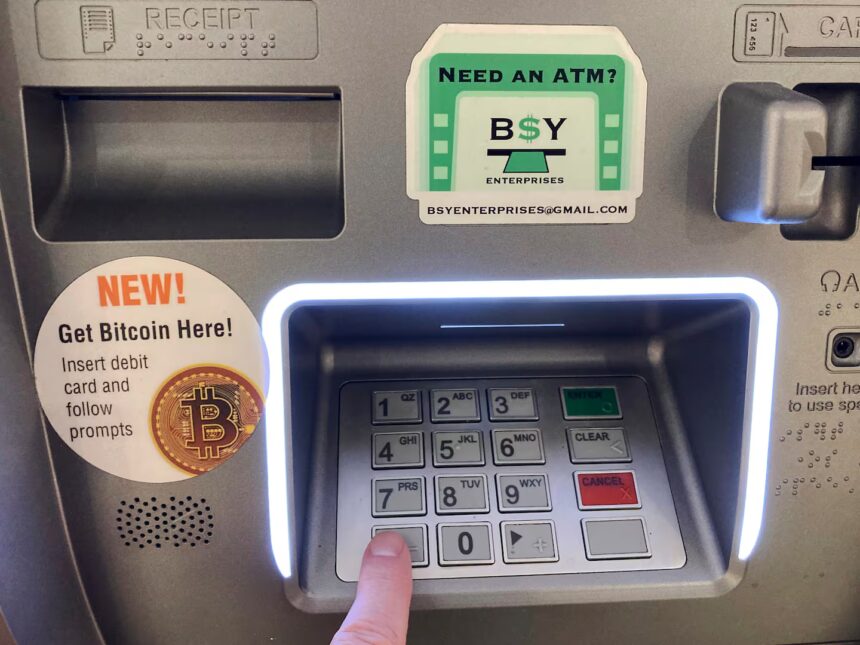
Waltham resident Nancy Lannom fell victim to an elaborate scam disguised as a warning from the online financial company PayPal. In an email claiming her bank account had been compromised, she was urged to protect her assets by transferring her savings to a bitcoin account provided by the fraudsters. Acting on the message, Lannom sent $15,000 to the account. It wasn’t until her daughter intervened that she realized the truth behind the scam. Despite the nearly insurmountable challenge of recovering her lost funds, Waltham police successfully traced and retrieved about $12,000.
Lannom expressed her gratitude for the recovery but feels that stronger regulations on bitcoin ATMs are necessary to protect others. She echoes the sentiment shared by AARP, advocating for a complete ban on these machines in light of the increasing number of victims. According to Lannom, the number of people falling prey to such scams escalates daily, highlighting the urgent need for action.
Benson, a representative for AARP, has been collaborating with state lawmakers to propose bills aimed at regulating bitcoin ATMs. These proposals include establishing a statewide registry, implementing limits on transaction fees, and capping individual deposits at $1,000. However, Benson now supports an outright ban due to the alarming rise in cryptocurrency fraud. The FBI’s 2025 Internet Crime report indicated staggering losses of $389 million related to cryptocurrency fraud, a 58% increase compared to the previous year. Additionally, Massachusetts Attorney General Andrea Joy Campbell reported that between August 2023 and January 2025, over 80% of bitcoin ATM transactions of $10,000 or more were linked to scams.
Campbell’s office has taken action, filing a lawsuit against one of the leading bitcoin ATM operators, Bitcoin Depot, alleging that the company is complicit in facilitating illegal transactions. The emergence of smartphone apps like Venmo, PayPal, and CashApp has made trading cryptocurrencies simpler and cheaper, leading to fewer legitimate users of bitcoin ATMs, which are often accompanied by high transaction fees. While these machines provide a crucial avenue for cash users to acquire cryptocurrency, they have also become a prominent target for scammers.
Indiana became the first state to ban bitcoin ATMs last year, reflecting a growing trend to curb these machines. Lonnie Talbert, the CEO of the ATM Industry Association, argues that regulating criminal activity should focus on tracking down offenders rather than penalizing legitimate businesses. He likened the situation to other forms of fraud, mentioning traditional checks and credit cards.
Support for a ban on bitcoin ATMs has gained traction among public officials, with endorsements from individuals such as Kathleen Murphy, president of the Massachusetts Bankers Association, State Representative Kate Lipper-Garabedian, Senator John J. Cronin, Essex County District Attorney Paul F. Tucker, and Waltham Mayor Jeannette McCarthy, whose community has already prohibited these machines.
Mary Mbugua, a breast cancer survivor from Haverhill, echoed the call for statewide legislation after a similar harrowing experience. Following a fraudulent email alleging she owed a debt, Mbugua was threatened with arrest, leading her to withdraw her savings and deposit them at a bitcoin ATM under duress. In a fortunate turn of events, her son alerted law enforcement, who were able to recover her funds.
Mbugua expressed the trauma of her experience and the importance of preventing others from facing similar situations. Her ordeal underscored the potential dangers of scams targeting vulnerable individuals.