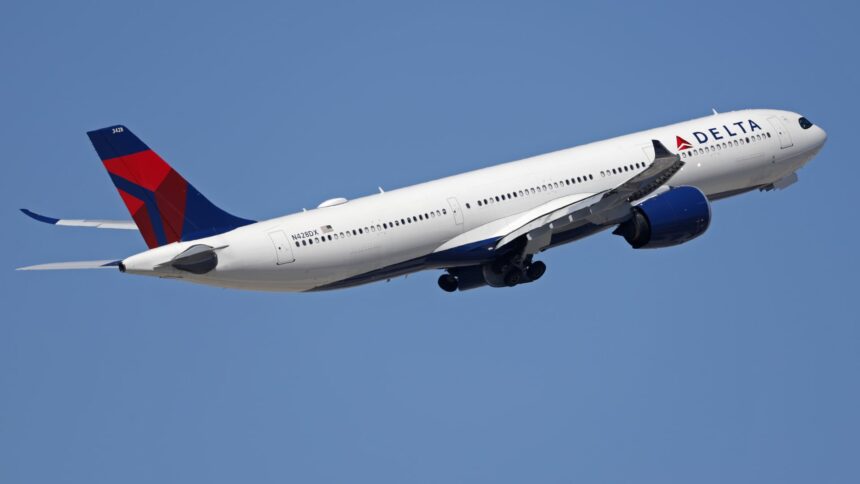
Delta Air Lines is preparing to significantly scale back its capacity growth plans as rising fuel costs impact the airline industry. This decision comes amid a surge in jet fuel prices triggered by geopolitical tensions in the Middle East. Following this announcement, Delta’s shares rose over 11% in premarket trading, a trend mirrored by other U.S. carriers after a drop in oil prices.
In its recent forecast, Delta projected adjusted per-share earnings of $1 to $1.50 for the second quarter, surpassing analysts’ expectations of $1.41. Revenue is expected to increase in the low teenagers percentage compared to last year, outpacing Wall Street’s forecast of around 10%. The airline indicated that its capacity would remain flat for the year.
Delta’s escalating fuel costs are projected to add an additional $2 billion to its expenses this quarter, further complicating the operating environment for airlines. In comparison to Wall Street’s projections for the first quarter, Delta reported earnings per share of 64 cents against an expected 57 cents, and adjusted revenue of $14.2 billion compared to forecasts of $14 billion.
Being the first major U.S. airline to report its first-quarter results, Delta’s response to fuel price fluctuations has been cautionary. Other airlines, including United and JetBlue, have already initiated capacity reductions for the current quarter. A decrease in capacity often leads to increased airfare, a trend already evident in the market. Additionally, Delta, alongside JetBlue and United, raised its checked bag fees.
Despite these challenges, demand for air travel remains robust, particularly in premium segments. Delta’s customers continue to spend on travel, especially for higher-end services such as first-class seating. However, CEO Ed Bastian noted that it remains uncertain whether this demand will wane amidst rising travel costs.
Delta’s refinery, which converts crude oil into jet fuel and other products, offers a strategic advantage over its competitors during these volatile times. Bastian commented on the refinery’s supportive role, especially if fuel prices remain high.
Jet fuel prices have escalated sharply, rising nearly 88% since late February, largely outpacing crude oil price increases. For the second quarter, Delta anticipates all-in fuel costs of $4.30 per gallon. While the airline is not altering its full-year earnings forecast, it is hesitant to make updates due to the unpredictability of fuel prices. Delta previously anticipated record earnings this year during a January report.
In the wake of eased tensions following a statement from President Donald Trump regarding Iranian infrastructure, oil futures witnessed a notable decline, which could influence future fuel costs.
On the performance front, Delta highlighted a 14% increase in premium ticket revenue year-over-year during the first quarter. Meanwhile, the main cabin revenue saw its first increase since late 2024. However, overall capacity dropped by 3% in the first three months of 2026, attributed to ongoing investments in fleet modernization aimed at enhancing the premium seat offering.
While Delta faced a net loss of $289 million, or 44 cents per share, for the first quarter, adjusted figures reflected a net income of $423 million, or 64 cents per share, signaling a recovery from the previous year’s performance. Revenue, adjusted for various factors, also saw a growth of over 9%.
Delta remains cognizant of the impact ongoing events may have on fuel prices and operational strategies, with plans to continually assess the market dynamics in the upcoming months.