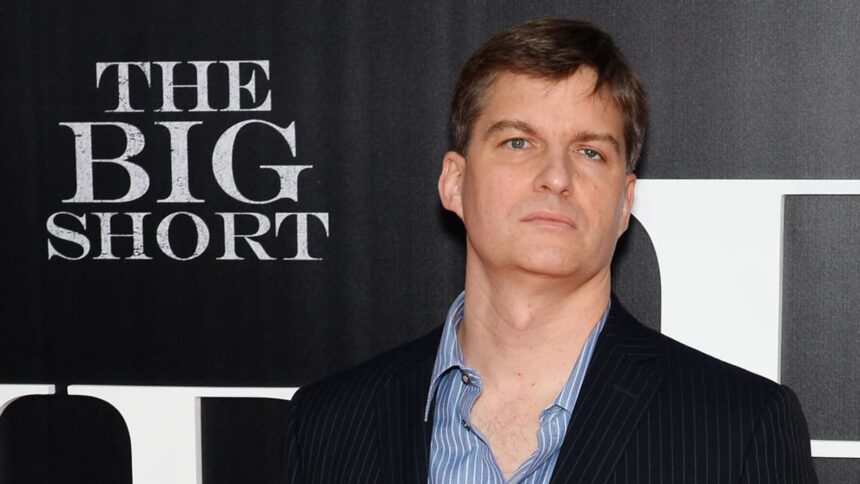
Michael Burry, the renowned investor known for his role in the blockbuster film “The Big Short,” has reaffirmed his bearish stance on Palantir Technologies. Despite receiving a boost from a public endorsement by former President Donald Trump, Burry remains resolute in his negative outlook. In a recent post on Substack, he detailed his ongoing investment strategy, which includes long-dated put options on the artificial intelligence software company.
Burry revealed that he began shorting Palantir in the fall of 2025 and has consistently rolled over his position. He currently holds June 17, 2027 strike price 50 puts and December 19, 2026 strike price 100 puts, indicating his confidence in a decline. He explicitly stated, “I am not selling these today.”
This statement follows Trump’s favorable comments about Palantir on his Truth Social platform, which provided a temporary uplift in the stock price after it had experienced a significant drop. Trump praised the company for its “great warfighting capabilities and equipment,” suggesting that it has become a pivotal resource for the U.S. military. In contrast, Burry argued that despite the stock climbing back from intraday lows, it remains “wildly overvalued,” with fundamental values he estimates to be less than half of its current market price, which was around $127 per share at the time.
With the stock down approximately 13% for the week and nearly 28% year-to-date, Burry remains skeptical about Palantir’s prospects. He noted that the stock had peaked near $200 last year and has since been reeling alongside other software stocks.
Burry’s critical stance on Palantir isn’t new; his previous bearish positions have not only targeted Palantir but also included high-profile companies like Nvidia. In the same Substack post, he disclosed that he had increased his bearish position on Nvidia, purchasing January 27 strike price 115 puts. He mentioned considering an outright short position but opted for the puts due to the limitations on maximum loss and manageable time decay associated with the options.
Burry’s insights continue to stir debate, particularly in a market that has seen fluctuations influenced by political endorsements and broader economic concerns. While some analysts believe Palantir could benefit from ongoing geopolitical tensions, particularly with U.S. military engagements, Burry’s skepticism underscores a growing divide among investors regarding the company’s valuation and future performance.