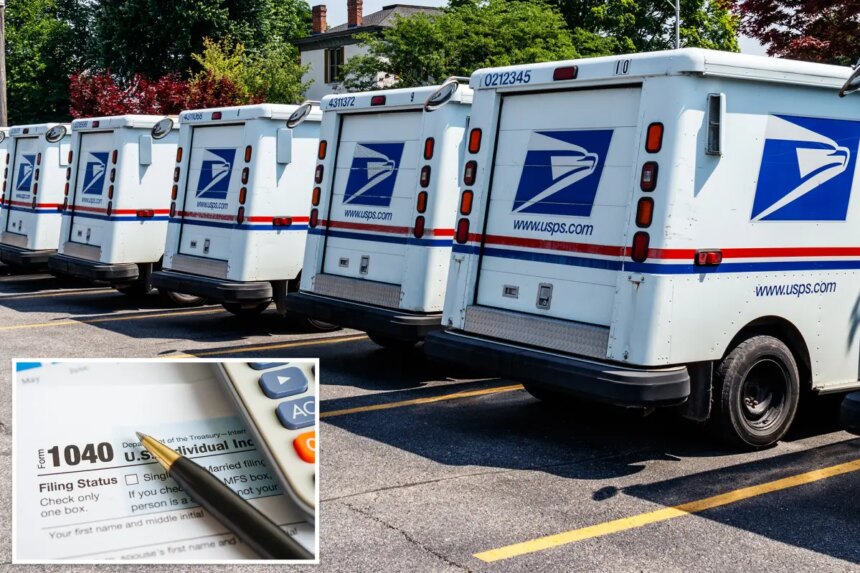
A significant shift at the U.S. Postal Service (USPS) could lead to taxpayers facing earlier deadlines for filing their taxes. Traditionally, taxes are due on April 15, but tax experts now warn that if individuals are filing by mail, they may need to submit returns as early as April 9.
In January, the USPS announced changes to its transportation operations that could result in mail not reaching processing facilities on the same day it is sent. This development is particularly concerning for taxpayers, as the IRS determines the timeliness of a tax return based on postmark dates. If a return is not postmarked by April 15 or earlier, it will be considered late, which could incur penalties and interest on any owed taxes.
This timing issue arises because postmarks are applied at processing centers and may not accurately reflect the date a letter was collected by a postal carrier or dropped off at a retail location. Given the high volume of mail handled by USPS, there might be significant delays that affect the postmark date.
The changes, which are intended to enhance operations at select post offices, could inadvertently create challenges for taxpayers, particularly those residing in rural areas. Notably, approximately one in five taxpayers live in these regions, where postal service delays could be more pronounced.
For those planning to file taxes by mail, gaining clarity on timing is critical. Taxpayers are advised not to rely solely on traditional mail services, especially as deadlines approach. To ensure that postmark dates and mailing dates align, individuals can utilize authorized private delivery services or visit a USPS counter to send their returns using certified or registered mail. These methods provide documentation to prove when mailing occurred, offering additional security in case of disputes over filing dates.
Furthermore, if taxpayers have postage adequately affixed but are concerned about the postmark, they can request a manual postmark from any post office. This service is offered at no charge, but it does not provide formal documentation.
Tax experts emphasize the importance of taking preventative measures. The Taxpayer Advocate Service advises that a small effort to obtain proof of mailing can prevent more significant issues, such as penalties, later on.
To avoid potential complications entirely, electronic filing is encouraged as it is the most reliable method for ensuring timely submissions. Additionally, if time constraints are pressing, taxpayers can apply for a six-month extension, pushing the deadline to October 15. However, this extension does not apply to tax payments, which remain due by the original April 15 deadline.