The U.S. housing market is undergoing a significant transformation, marking a notable shift from the high-octane dynamics of the post-pandemic boom to what analysts describe as a historical “reversion to the mean.” According to a new report from the American Enterprise Institute (AEI) Housing Center, the data underscores a dramatic slowdown in home price appreciation, which has now reached its lowest point since the AEI began tracking housing statistics in 2012.
Over the past year, from February 2022 to February 2023, the average increase in housing prices across the nation was a mere 1.1%. This stagnation is compounded by projections that suggest a further downturn in the market. Current estimates indicate a potential decline in single-family housing prices by 1% by the end of 2026, with additional decreases of 2% anticipated in both 2027 and 2028. Notably, these value drops are occurring alongside persistent inflation, meaning that homes could potentially sell for less in real terms, eroding their value even further.
This downturn is a stark contrast to the dramatic price increases seen in the years following the pandemic. Between 2013 and early 2020, home price appreciation (HPA) consistently ranged from 5% to 7%. The Federal Reserve’s aggressive interest rate reductions, which brought mortgage rates down from 4.6% in late 2018 to approximately 2.6% at the start of 2021, acted as a catalyst for soaring home prices. By early 2022, the annual rate of HPA had escalated to around 18%, significantly outpacing pre-pandemic rates.
During this surge, hot markets in the Sun Belt states, as well as glamorous cities in the West like Denver and Seattle, attracted the bulk of price increases. Major cities such as Las Vegas saw home prices skyrocketing by 45%, while Phoenix experienced a staggering 60% increase from 2019 to mid-2022. Conversely, cities in the Rust Belt and Midwest had much slower growth, with gains typically between 25% and 33% during this same period.
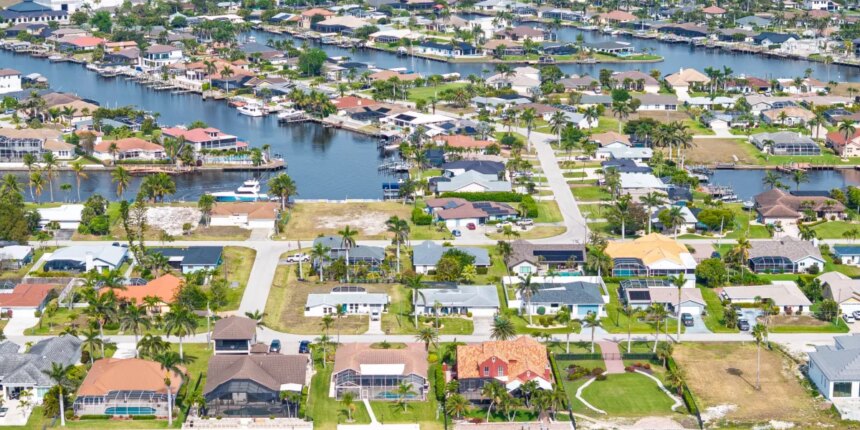
The AEI report illustrates a dramatic reversal in performance, with cities that once thrived now facing declines. Cape Coral, Florida, has led the downtrend with a 9.6% drop in prices, followed closely by other Florida cities like North Port and Palm Bay as well as Memphis and Tucson. In stark contrast, Midwestern cities like Kansas City, Pittsburgh, and Cleveland have emerged as top performers, registering positive price growth of 5.8% to 8.6%.
Overall, a significant portion of the country is experiencing price decreases, with 28 of the largest 53 metro areas observing drops. Notably, all major markets in Florida, California, and Texas are struggling, while cities in the Rust Belt are benefiting from this shift, with Louisville and Grand Rapids showing notable increases.
The supply dynamics within the housing market have also shifted dramatically. Many cities now report over seven months of inventory, suggesting a transition to a buyer’s market. For instance, Miami has nearly a year’s worth of unsold homes, while other cities like Tampa and Austin hover close to eight months of inventory. This glut is likely to pressure prices downward further.
Analysts predict that markets that saw the most dramatic escalations in home prices, like Cape Coral and Phoenix, may be disproportionately affected as properties become unaffordable for many prospective buyers, particularly first-time homeowners. The steep rise in mortgage rates, now hovering around 6.5%, adds a burdensome layer of complexity to potential home purchases, forcing prices further down to align with market realities.
Experts suggest that once these once-booming metro areas return to more sustainable price levels, they may regain their popularity among buyers. Meanwhile, cities within the Midwest and East Coast are experiencing an increased interest in their comparatively affordable markets. This shift is heralded as the onset of an “affordability economy,” marking a change in the housing landscape that favors historically stable regions over previously trendy hotspots.