Asian stock markets experienced significant declines as investors reacted to the escalating geopolitical tensions following President Donald Trump’s announcement of a naval blockade affecting Iran. This development has injected new turmoil into financial markets, contributing to a broader sense of uncertainty among traders.
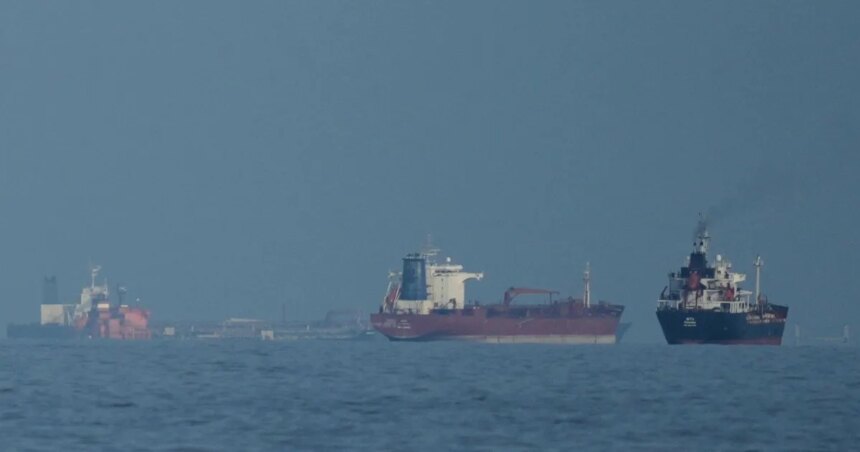
In a statement made on Sunday, Trump declared that the US Navy would block all ships from entering or exiting the strategically vital Strait of Hormuz beginning Monday at 10 a.m. Eastern Time (14:00 GMT). This decision was made following the breakdown of ceasefire negotiations between US and Iranian officials over the weekend. However, US Central Command later clarified that the blockade would only affect vessels traveling to and from Iran, potentially easing concerns about a full blockade that could severely disrupt global shipping routes.
As a result of the blockade announcement, oil prices surged dramatically, with Brent crude—the international benchmark—rising more than 8 percent to surpass $103 a barrel. This marked a significant increase, given that Brent had fallen below $92 per barrel just a week prior. Oil prices had already been volatile due to previous US-Israeli strikes on Iran that led Tehran to impose a de facto blockade in the Strait of Hormuz—a crucial passage through which roughly one-fifth of the world’s oil and natural gas supply is transported.
Despite a fragile ceasefire officially remaining in effect until April 22, maritime traffic in the region has significantly diminished. Only 17 vessels reportedly crossed the strait on Saturday, a stark decrease compared to the approximately 130 daily transits recorded before the onset of war. This reduction has raised fears about potential disruptions to global oil supplies, further contributing to the recent spike in prices.
In response to the blockade and the fears surrounding it, major stock markets across Asia opened Monday on a downward trend. Japan’s benchmark Nikkei 225 index declined by 0.9 percent during morning trading. Conversely, South Korea’s KOSPI experienced a more substantial drop of over 1 percent. Additionally, US stock futures, which provide an indication of future market performance, fell as well, with futures tied to the S&P 500 down around 0.8 percent.
The rising geopolitical tensions and their ripple effects on oil prices and stock markets have left traders and investors grappling with uncertainty, and many will be closely monitoring the situation in the coming days as developments unfold.