Global markets experienced a significant boost on Tuesday, fueled by optimism surrounding potential ceasefire negotiations between the United States and Iran. This renewed hope emerged after U.S. President Donald Trump announced that Iranian officials had reached out to his administration, signaling their eagerness to negotiate a deal. “We’ve been called by the other side, and they would like to make a deal very badly,” Trump stated during comments made at the White House.
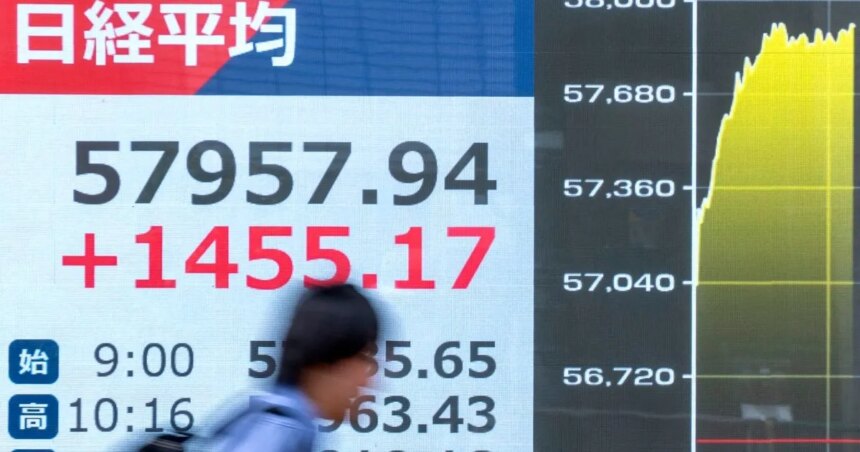
As a result of this positive news, major Asian stock markets saw substantial gains. Japan’s benchmark Nikkei 225 jumped as much as 2.5 percent, while South Korea’s KOSPI surged approximately 3.7 percent. Additionally, Singapore’s Straits Times Index increased by about 0.6 percent. In Hong Kong, the Hang Seng Index rose by roughly 0.4 percent in early afternoon trading, and the SSE Composite Index in Shanghai also saw a 0.5 percent uptick. This rally followed an upward trend on Wall Street, where the S&P 500 closed 1 percent higher overnight.
In the energy sector, Brent crude oil prices dipped nearly 1.5 percent, falling below $98 a barrel, despite continued tensions in the region. The positive market movement occurred even as the U.S. military took steps to impose a naval blockade on Iranian ports, a move that analysts caution could exacerbate the already pressing energy shortages impacting the global economy. Recently, Brent crude had seen a rise above $103 per barrel after Trump threatened to impose a blockade on the Strait of Hormuz, which serves as a vital artery for about one-fifth of the world’s oil and natural gas supplies.
However, subsequent clarifications from military officials indicated that the blockade would be limited to vessels entering and exiting Iranian ports, appearing to mitigate the earlier, more severe implications of the President’s threats. This development is critical, especially considering Iran’s actions that have effectively stalled shipping through the Strait since the onset of the war on February 28. According to maritime intelligence provider Windward, only 21 vessels transited the strategic strait on Sunday, a sharp decline from the approximately 130 daily transits seen before the conflict began.