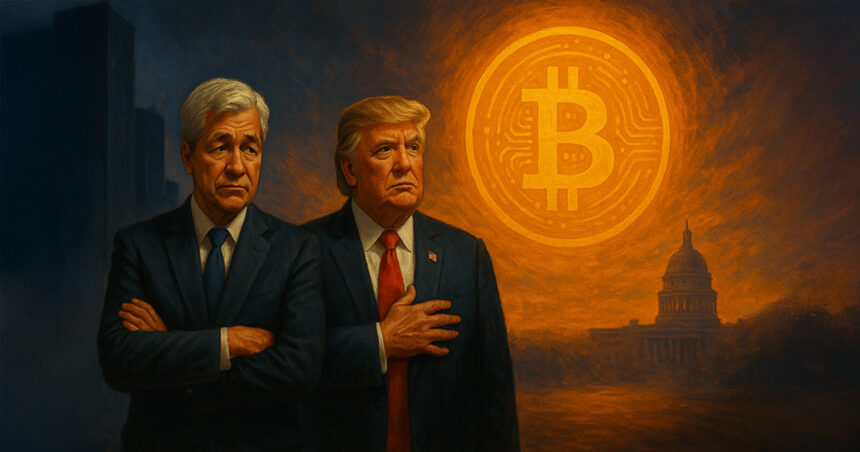
The perception of Bitcoin, often referred to as the “magic internet money,” has undergone a remarkable transformation over recent years. Initially met with skepticism and criticism, influential figures across various industries have shifted their perspectives, recognizing the asset’s unique properties of scarcity, durability, and predictability. This evolution is epitomized by a phrase from Anthony Pompliano, indicating that “eventually everyone understands Bitcoin.”
Take Jamie Dimon, CEO of JPMorgan Chase, as an example. Back in 2017, Dimon labeled Bitcoin a “fraud” and even threatened to terminate employees who engaged in trading it. However, today, JPMorgan actively provides Bitcoin exposure to its clients, with Dimon now participating in discussions around cryptocurrency, albeit with some reservations about specific aspects.
Similarly, Larry Fink, the CEO of BlackRock, expressed his disdain for Bitcoin by referring to it as “an index of money laundering.” This statement seems a world away from his current position, where BlackRock is now managing a Bitcoin ETF, and he publicly acknowledges Bitcoin as “digital gold.” This significant pivot has dramatically influenced market sentiments, illustrating a broader acceptance of digital assets within established financial frameworks.
Jerome Powell, Chair of the Federal Reserve, also had a skeptical stance toward cryptocurrency for many years. Today, however, under his stewardship, the Fed is actively monitoring Bitcoin, recognizing its potential role in global markets and its positioning as a competitor to gold.
Political figures, too, have not been immune to this shift. Donald Trump, who once described Bitcoin as highly volatile and insubstantial, has been noted in reports for courting crypto supporters and acknowledging Bitcoin’s growing relevance in political circles.
Michael Saylor stands as a notable example of a complete turnaround. Initially a skeptic, he questioned the longevity of Bitcoin back in 2013. Since 2020, Saylor’s company, MicroStrategy, has amassed over 636,000 Bitcoins, making it the largest holder among publicly traded companies. His transformation into a vocal advocate for Bitcoin has marked him as one of its most prominent proponents.
Mark Cuban, who previously criticized Bitcoin as being no more valuable than bananas, has embraced the cryptocurrency landscape. Now actively participating in the crypto and NFT ecosystems, he holds Bitcoin and advises various blockchain companies, demonstrating another instance of how perceptions can evolve.
Governments, too, are beginning to reshape their approaches to Bitcoin. The United States has emerged as the largest holder of Bitcoin, with China trailing closely. These holdings often come from law enforcement seizures or strategic mining decisions, highlighting a significant shift from outright bans to a focus on accumulation and research.
This collective movement toward recognizing Bitcoin’s value showcases a broader trend of acceptance. Whether driven by economic motives, technological curiosity, or a fear of missing out, prominent figures across Wall Street and Washington have converged on a common understanding: Bitcoin is not just a fleeting trend; it is an asset here to stay.
The transition from skepticism to acceptance at higher levels of governance and finance underscores the notion that, despite initial resistance, recognition of Bitcoin’s importance is becoming universal. As Pompliano succinctly put it, “eventually everyone understands Bitcoin.”