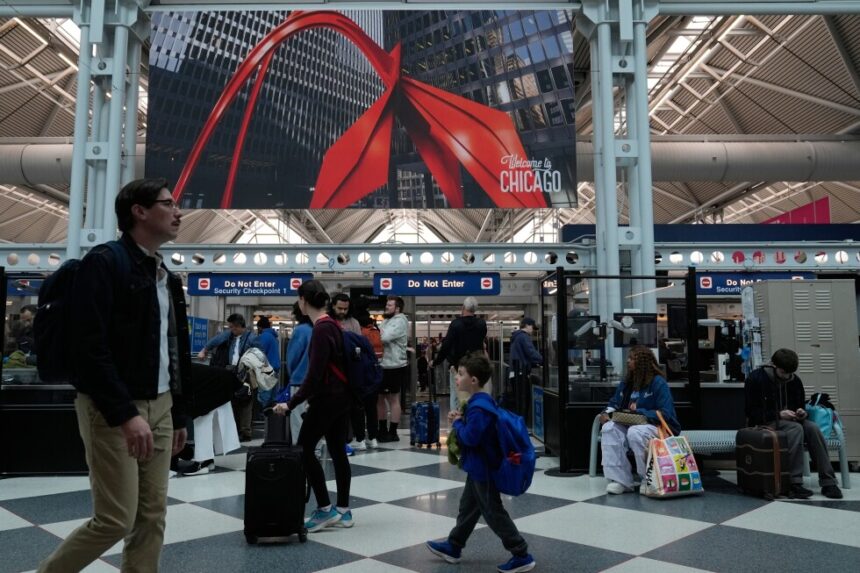
In a bid to alleviate flight delays at Chicago O’Hare International Airport, federal officials announced a significant reduction in the number of scheduled flights this summer, with approximately 300 flights per day slated to be cut during peak travel times. Transportation Secretary Sean Duffy emphasized the importance of ensuring that travelers can enjoy “certainty” in their travel plans, free from the frustration of prolonged delays and cancellations.
As one of the busiest airports in the United States, O’Hare already held the dubious distinction of having one of the worst delays records last year. This summer, the airport is projected to see over 3,080 flights on peak days, reflecting a 14.9% increase from the previous summer. The surge in traffic comes amidst ongoing construction projects, which have resulted in notable taxiway closures, further complicating air traffic management.
In its draft order, the federal government underscored concerns regarding expansion plans announced by American and United Airlines. Officials indicated that these expansions could contribute to significant delays, placing additional strain on the airport’s infrastructure and capacity. Secretary Duffy highlighted that the projected flight schedule was unrealistic and could exceed the airport’s operational capabilities. As a result, the cap on flights at O’Hare will now be set at a maximum of 2,708, which, while slightly higher than last summer’s peak limit of 2,680, is aimed at reducing delays and ensuring a smoother travel experience during the busy summer months.
Flight reductions will be more pronounced during peak days, while Tuesdays, Wednesdays, and Saturdays—historically quieter days—will see fewer cuts due to their lower flight volumes.
The new flight limitations will take effect from May 17 and will remain in place until October 24. Airlines will need to assess their schedules in response to the order and communicate with customers regarding any flight cancellations resulting from the adjustments.
American Airlines expressed optimism about the FAA’s decision, suggesting it will enhance reliability for travelers. The airline appreciated the swift action taken by the government to safeguard consumer interests and maintain competition in the market. American estimates that it may need to cut around 40 arrivals and departures per day. In contrast, United Airlines anticipates a more substantial reduction, potentially exceeding 200 flights per day, though it has yet to provide a specific estimate.
Both carriers plan to evaluate the schedule changes thoroughly and will relay necessary information to affected travelers as they finalize their operational adjustments.