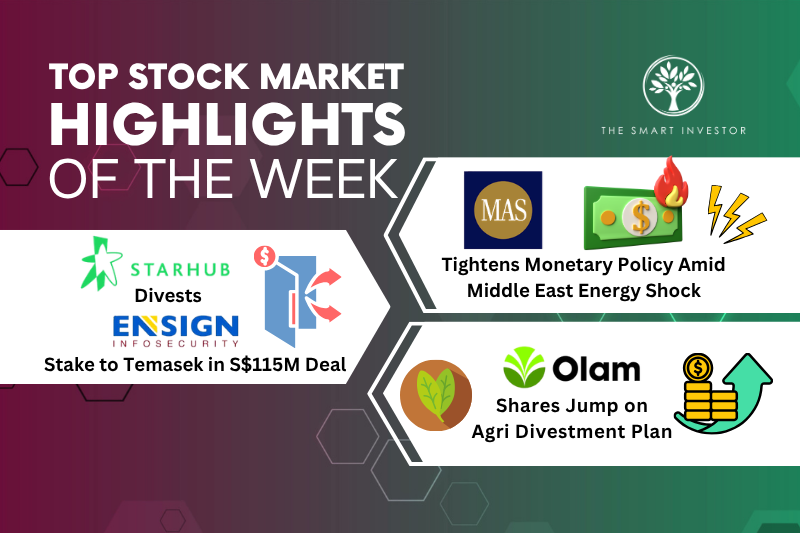
This week has seen significant developments in Singapore’s economic landscape, with the Monetary Authority of Singapore (MAS) intensifying its monetary policy measures in response to rising global energy costs and notable corporate shifts among two major local firms.
On April 14, 2026, the MAS announced an adjustment to its monetary policy by slightly increasing the rate of appreciation for the Singapore dollar nominal effective exchange rate (S$NEER) policy band. While the overall width of the band and its centering level remain unchanged, the decision comes in light of sharply rising energy prices caused by severe disruptions to global shipping through the Strait of Hormuz since late February 2026. These escalating costs are anticipated to inflate Singapore’s import expenses and elevate MAS Core Inflation to approximately 2.5% year-on-year before settling back to historical averages later in 2027.
Despite these inflationary pressures, Singapore’s economy posted a robust growth of 4.6% year-on-year in the first quarter of 2026, although there was a quarter-on-quarter contraction of 0.3%, following a strong performance in late 2025. Forecasts suggest that GDP growth for the entire year may dip from the exceptional 5.0% achieved in 2025, with a revised outlook expected in May. MAS highlighted that ongoing investments in AI and stable regional electronics production could provide some cushion against the prevailing energy supply challenges.
In corporate news, StarHub Ltd has made headlines by agreeing to transfer control of its cybersecurity joint venture, Ensign InfoSecurity, back to co-shareholder Temasek Holdings in a transaction valued at S$115 million. The deal is expected to lead StarHub to realize a gain on disposal of around S$200 million. Formed in 2018 through a collaboration between StarHub and a Temasek subsidiary, Ensign has emerged as Asia’s leading pure-play cybersecurity firm, with operations spanning multiple countries including Singapore, Malaysia, Indonesia, Hong Kong, and South Korea. The sale is seen as a tactical move to unlock value and enhance StarHub’s financial position after a reported 46% decline in net profit for the full year 2025.
Meanwhile, Olam Group’s shares surged nearly 8% following the receipt of regulatory approval for a partial divestment of its agribusiness unit, Olam Agri Holdings, to the Saudi Agricultural & Livestock Investment Company (SALIC). This transaction, initially announced in February 2025, involves SALIC acquiring a 44.58% stake in Olam Agri for approximately US$1.78 billion, with the entire equity valuation of Olam Agri pegged at US$4 billion. Upon completing the first tranche of the deal, SALIC will hold a controlling interest of 80.01% in Olam Agri, while Olam Group retains a 19.99% stake, along with a put option that could bolster their standing further down the line.
Completion of the entire transaction is projected to yield around US$3.87 billion for Olam Group, contributing significantly to its restructuring goals aimed at simplifying its portfolio, reducing indebtedness, and returning capital to shareholders. Following the first tranche alone, Olam anticipates realizing a gain of approximately US$1.84 billion, which will be strategically utilized to eliminate existing debt and fortify its food ingredients division.
As energy prices fluctuate and market volatility persists, investors are encouraged to stay informed and prepare for potential market shifts. Upcoming financial events and resources are being offered to help investors navigate this uncertain landscape.