In recent weeks, the stock market has fluctuated dramatically, reflecting a blend of optimism and concern among investors. The Dow Jones Industrial Average and Nasdaq Composite, key indicators of market performance, recently dipped into correction territory, with the S&P 500 not far behind. However, a swift recovery occurred, erasing many of the prior losses, suggesting that optimism remains a strong force on Wall Street.
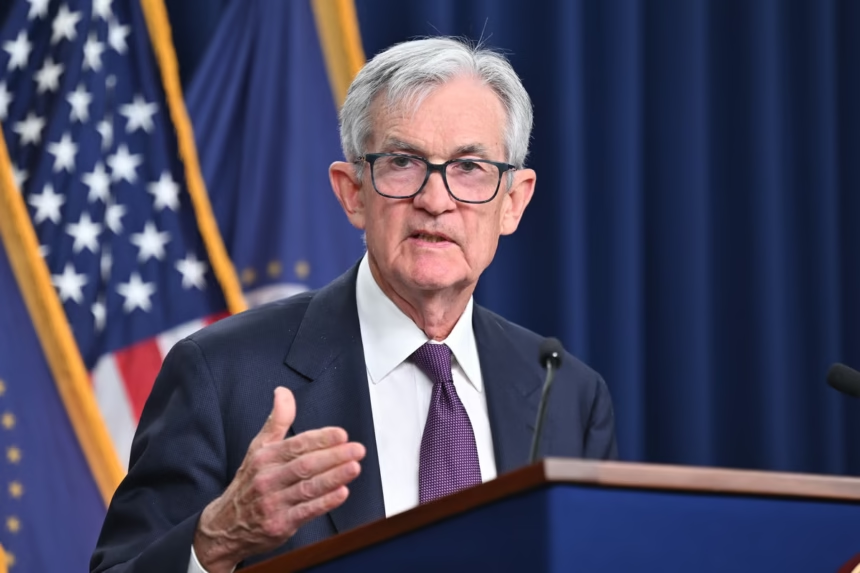
Despite this surge, there are warnings that the market’s rebound may be short-lived, especially with significant changes looming at the Federal Reserve. On May 15, Jerome Powell’s second term as the Fed Chair will officially end, marking a potential shift in monetary policy. President Trump has nominated Kevin Warsh as Powell’s successor, a decision influenced by their past disagreements over interest rates.
Warsh, who previously served on the Federal Reserve’s Board of Governors and was a part of the Federal Open Market Committee, is known for a hawkish stance on inflation. His approach showed a preference for prioritizing price stability over employment growth, even during economic downturns such as the Great Recession. This history raises concerns among investors who expect the Fed to cut interest rates amid rising inflation pressures, especially in light of recent geopolitical tensions.
President Trump’s military actions in Iran have exacerbated inflation, with the U.S. and Israeli strikes leading to significant disruptions in oil supply through the Strait of Hormuz, a critical chokepoint for global oil exports. This has resulted in soaring crude oil prices and the most rapid increase in gas prices seen in over three decades. The latest inflation data indicates a sharp rise in overall consumer prices, which have now exceeded the Fed’s long-term target of 2% for five consecutive years.
As inflation continues to rise, concerns mount that Warsh’s appointment could coincide with a challenging moment for the stock market. Historically, significant energy price shocks can have long-lasting effects, and the current trajectory of inflation suggests that further rate hikes may be necessary, countering previous expectations of rate cuts.
Investors are left to grapple with a complex environment: a potentially hawkish Fed under Warsh taking the helm amid rising inflation, alongside an expensive stock market that had earlier positioned itself for a series of rate cuts this year. With a potential worst-case scenario looming on the horizon, market participants will be closely monitoring developments as May 15 approaches.