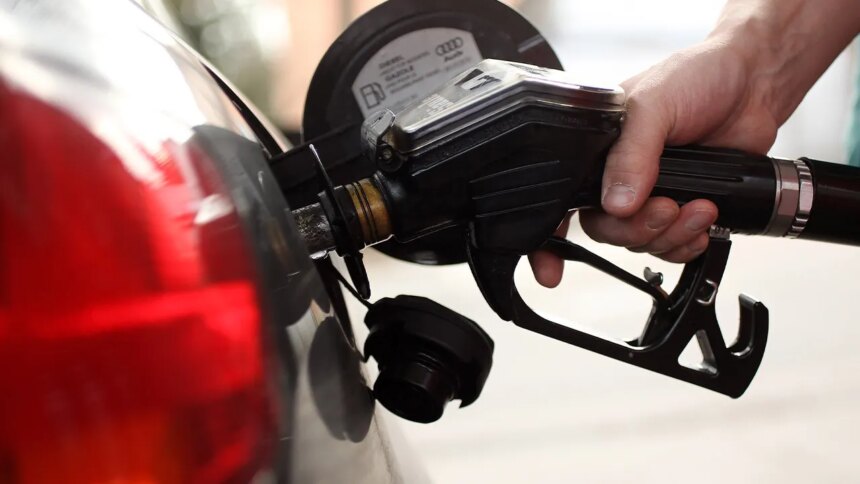
During a recent appearance on ‘Varney & Co.,’ American Petroleum Institute CEO Mike Sommers raised alarms about a potential global oil shortage and disruptions in the Strait of Hormuz, cautioning that these factors could lead to rising gas prices as the peak summer demand approaches. His comments coincide with a dialogue about the current state of gas prices in the United States and the influence of international events.
Former President Donald Trump responded to remarks made by Energy Secretary Christopher Wright regarding gas prices, which suggested that a return to $3 per gallon might not occur until next year or later. Trump expressed strong disagreement, stating, “I think he’s wrong on that, totally wrong,” during an interview with The Hill. He projected confidence that gas prices would decrease significantly “as soon as this ends,” referring to the blockade led by Iran in the Strait of Hormuz. Trump emphasized the economic impact of Iran’s actions, noting, “They lose $500 million a day with the blockade up. We control it. They don’t control it.”
Wright’s comments, while not entirely misaligned with Trump’s perspective, reflected a more cautious outlook. He acknowledged that prices are expected to peak but hesitated to predict exactly when they might dip below $3 a gallon again. “I don’t know, that could happen later this year, that might not happen until next year,” he told CNN’s Jake Tapper. Wright did assert, however, that a resolution to the ongoing conflict would bring a decrease in energy prices.
As of Monday, AAA reported that the average gas price in the U.S. stood at around $4.04 per gallon. Notably, gas prices vary significantly across the country, with the highest averages found in coastal states and lower averages in the Midwest.
During the discourse around fluctuating gas prices, Treasury Secretary Scott Bessent responded to concerns about price spikes at local gas stations in light of geopolitical tensions. He assured that the Treasury Department would monitor the market closely, aiming to keep gas stations “honest” about their pricing practices. Bessent conveyed a sense of vigilance, stating, “We’ll be looking at Treasury to try to keep the retail gas stations honest — that you did this on the way up, better be doing this on the way down.”
He also mentioned the U.S. is a net exporter of oil and holds sufficient domestic supply, which counters the narrative that local price hikes are justified by fears of global supply shortages. “Bad actors” in the market responding to these fears would not have a substantive basis for raising prices, he contended.
Both Trump and Bessent remain optimistic about a return to lower gas prices, highlighting the temporary nature of current inflation issues tied to oil supply disruptions. Bessent concluded with a cautionary note about market behavior, suggesting that price inflation should not be readily accepted, promising ongoing oversight of the situation.