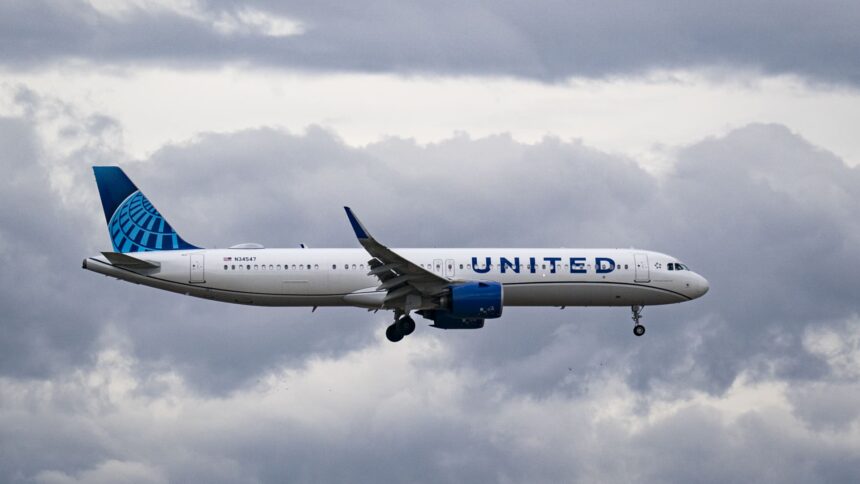
United Airlines announced a significant reduction in its earnings outlook for 2026, largely due to skyrocketing jet fuel prices as a result of ongoing conflict in Iran. The airline revised its earnings forecast to a range of $7 to $11 per share on an adjusted basis, a notable decrease from the earlier prediction of $12 to $14 per share made in January, prior to the escalation of military actions against Iran.
In response to the rising costs, United is also scaling back its flight schedules for the year to manage expenses more effectively. Analysts had already begun adjusting their projections, with LSEG estimates suggesting an adjusted full-year earnings of $9.58 per share. The airline projected second-quarter earnings in the range of $1 to $2 per share, falling short of analysts’ expectations of $2.08.
The airline indicated that it anticipates its fuel prices will average $4.30 per gallon during the second quarter. Despite this, United expects its revenue will mitigate some of the fuel price increases, aiming to cover between 40% to 50% of the increase in the second quarter, rising to as much as 100% by year-end.
On a more optimistic note, United Airlines reported substantial revenue growth in its first quarter results. The company generated $14.61 billion, surpassing Wall Street expectations of $14.37 billion and marking an increase of over 10% from $13.21 billion a year prior. Net income for this period surged by 80% to $699 million, or $2.14 a share, compared to $387 million, or $1.16 a share, a year earlier. The adjusted earnings per share reached $1.19, exceeding expected figures of $1.07.
Performance across various segments was strong, particularly within domestic U.S. flights, which saw unit revenue growth of 7.9% to $7.9 billion. This indicates a robust pricing strategy as CEO Scott Kirby emphasized the company’s substantial resilience even when faced with rising fuel costs.
The fluctuating price of jet fuel reflects a complex landscape; prices had recently dipped to $3.51 per gallon but remain significantly higher than earlier this year. Executives across the industry noted robust demand despite increasing fares and checked bag fees, suggesting that consumers are willing to spend more for travel.
In parallel, United Airlines is also navigating discussions around potential mergers within the industry. Scott Kirby is expected to address speculation regarding a merger with American Airlines during an upcoming earnings call. Recent conversations suggested that while Kirby explored the merger idea earlier in the year, it was met with resistance from both American Airlines and former President Donald Trump, who preferred that the federal government support struggling carriers like Spirit instead.
The airline industry finds itself at a crossroads as it contemplates the complex dynamics of rising operational costs and shifting consumer behavior while also considering strategic partnerships amid challenging economic conditions.