Recent developments in quantum computing technology have reignited concerns regarding the security of Bitcoin, particularly in relation to its elliptic curve signatures. Analysts, including bitcoin expert James Check, caution that a sufficiently advanced quantum computer could potentially unravel the cryptographic safeguards that protect early bitcoin wallets, particularly those from the era of Satoshi Nakamoto. This scenario poses a risk where exposed wallets could lead to a massive influx of bitcoins into the market, overwhelming supply and causing a significant price crash.
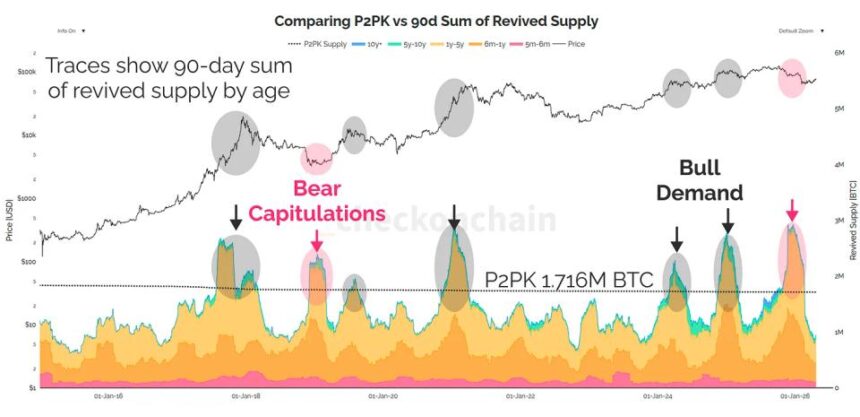
Currently, approximately 1.7 million bitcoins are held in Satoshi-era addresses, which translates to around $145 billion in potential sell pressure based on current market prices. While this figure might appear catastrophic, analysis suggests it could be manageable. During periods of market growth, long-term holders—those who have kept their bitcoins for over 155 days—tend to sell between 10,000 and 30,000 bitcoins daily. This selling rate indicates that the total available supply from Satoshi-era wallets represents merely two to three months of typical profit-taking.
In the most recent bear market, trading volume saw over 2.3 million bitcoins change hands within just one quarter, surpassing the total supply from the quantum “target” without triggering a systemic collapse. Additionally, monthly inflows to exchanges are approaching 850,000 bitcoins, with derivatives markets cycling notional volumes that equal the total Satoshi stash every few days. When viewed in the context of Bitcoin’s overall liquidity and trading volume, the potential risks emerge as less daunting.
However, a sudden and concentrated release of these coins could still impact market stability, likely inducing volatility and possibly inciting a prolonged downturn. This outcome would typically assume economically irrational behavior on the part of sellers. Stakeholders capable of accessing these Satoshi-era coins would likely prefer a gradual distribution to mitigate adverse market effects, increasingly utilizing derivatives to manage slippage and optimize their returns.
Ultimately, while the mechanical sell pressure associated with quantum vulnerability poses notable concerns, the true challenge lies in governance. The pressing issue may be the potential for staking or freezing these Satoshi coins through proposals like BIP-361, allowing the market to adjust naturally in response to changing dynamics. As quantum technology advances, the conversation around Bitcoin’s security continues to evolve, prompting ongoing discussions about its long-term viability and governance strategies.