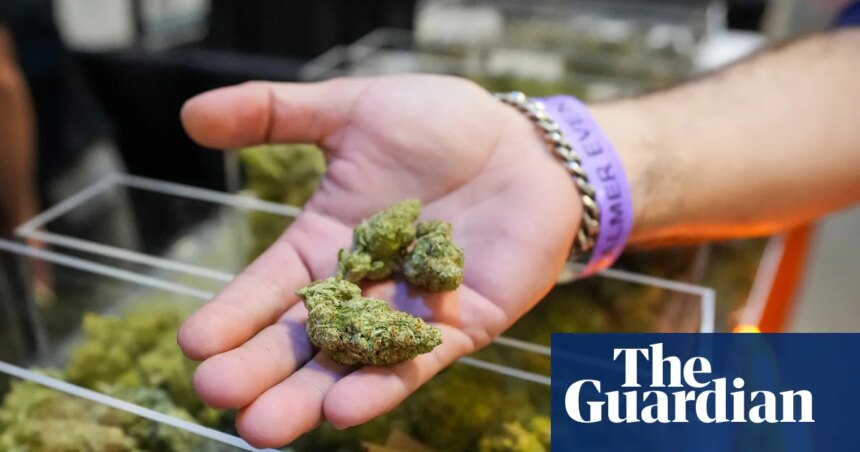
The Trump administration has undertaken significant steps to reclassify marijuana, moving it from a Schedule I to a Schedule III classification under the Controlled Substances Act. This reclassification follows an executive order signed by Donald Trump, highlighting his administration’s commitment to challenging the traditional categorization of marijuana alongside more dangerous drugs like heroin and LSD.
The Schedule III designation places marijuana in a category alongside substances such as ketamine and anabolic steroids, which implies a perceived lower potential for abuse and allows for medical use. On Thursday, the acting attorney general, Todd Blanche, confirmed the reclassification in a post on X, asserting that the Department of Justice is fulfilling Trump’s promise to enhance American healthcare. He stated that this action would facilitate targeted research into marijuana’s safety and efficacy, subsequently broadening patient access to treatments.
This development comes shortly after President Trump signed another executive order aimed at streamlining the review process for psychedelic drugs, including ibogaine. Many of these substances currently reside in the same high-abuse category as marijuana, and the executive order could potentially lead to eased restrictions and enhanced research opportunities in the medical field.
During the earlier signing event, Trump expressed frustration with federal officials for what he described as the “slow-walking” of the marijuana rescheduling process. He implored them to expedite the reclassification, emphasizing the importance of moving forward without unnecessary delays.
It’s essential to note that while this reclassification represents a significant shift, it does not equate to the immediate legalization of marijuana nor does it affect the legal status of individuals incarcerated for possession charges. Moreover, the classification still involves business banking restrictions, primarily due to ongoing risks associated with anti-money laundering laws.
Marijuana remains legal in various forms across 40 states in the U.S., although it continues to face transport restrictions across state lines without proper authorization. Recent data indicates a surplus of the drug in marijuana-legal states, leading to a significant drop in wholesale prices, referred to as the “ganja glut”.
In political discussions surrounding the reclassification, figures such as Republican operative Roger Stone have emphasized the need for action before the midterm elections, citing marijuana’s appeal to younger and libertarian voters. Stone has accused certain administration officials of delaying the reclassification process.
The announcement comes amid a backdrop of changes in leadership within the attorney general’s office, particularly following the dismissal of Pam Bondi, who previously opposed marijuana reform. Todd Blanche, her replacement, shared during his deputy attorney general confirmation process that he would approach the issue of marijuana reclassification with careful consideration and consultation with key stakeholders, including those from the Drug Enforcement Administration.
Public sentiment appears to lean toward relaxing marijuana restrictions, with various polls suggesting a majority support for legalization. An Economist/YouGov poll indicated that 53% of adults were in favor of legalizing marijuana, including a notable portion of Republican respondents. Furthermore, a survey by NuggMD revealed that 83% of participants supported Trump’s recent executive order regarding marijuana reclassification, reflecting a substantial approval from the public, with minimal opposition.