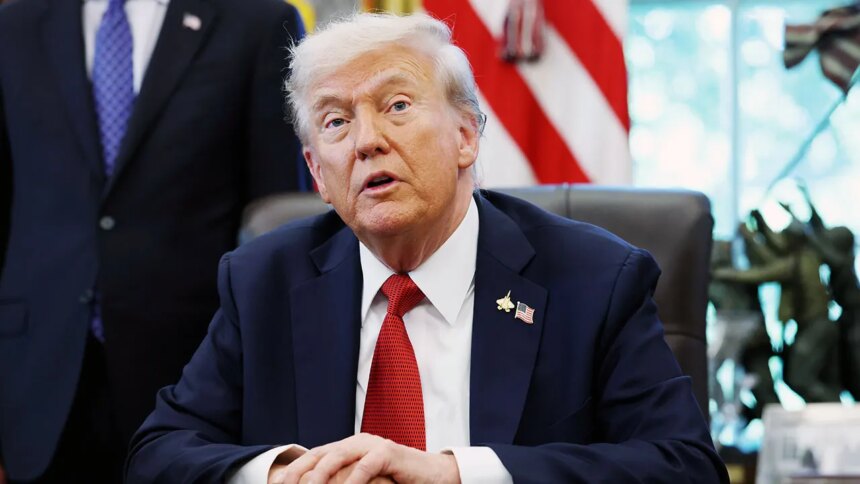
The recent discussions surrounding Spirit Airlines’ bankruptcy have garnered significant attention, particularly regarding the potential implications for the airline industry and its workers. In a recent meeting at the Oval Office, former President Donald Trump proposed an unconventional strategy that involves a taxpayer-funded takeover of Spirit Airlines as an alternative to a traditional bailout. This plan has already drawn criticism for its complexity and potential risks.
During the meeting, Trump expressed his intent to help Spirit Airlines, which is currently navigating through bankruptcy proceedings. “We’re thinking about doing it, helping them out and meaning bailing them out or buying it. I think we just buy it,” Trump stated. He emphasized that the airline could be acquired virtually debt-free, citing the value of its aircraft and overall assets. Trump’s vision hinges on waiting for a potential decrease in oil prices, after which he anticipates reselling the company for a profit. “If we could get it for the right price, I’d do it to save jobs,” he declared, highlighting the importance of preserving thousands of American jobs tied to the airline.
Spirit Airlines has faced a myriad of financial difficulties for several years, including multiple Chapter 11 bankruptcy filings and unfruitful merger attempts with other low-cost carriers. The airline has struggled with escalating operational costs, a situation further exacerbated by rising jet fuel prices tied to global conflicts. Trump’s proposal came in the context of discussions about a possible $500 million loan aimed at supporting the airline and safeguarding jobs within the industry.
As discussions unfold, some lawmakers have expressed skepticism regarding Trump’s takeover idea. Senator Ted Cruz characterized the plan as a “terrible idea,” suggesting that it may introduce more complications than solutions.
In detailing his approach, Trump mentioned the need for strong leadership in managing the airline. He proposed placing a “smart person” in charge who would run the airline effectively and capitalize on improved market conditions when they arise. “If they run it properly and if prices come down, all of a sudden it’s a valuable asset,” he remarked, underscoring his belief that maintaining a robust airline sector is vital for competitive pricing.
With an estimated workforce of 18,000 employees, Trump reiterated his commitment to retaining jobs in the airline sector. He argued that sustaining various airlines like Spirit contributes to a healthier competitive landscape in air travel, asserting, “I like having a lot of airlines. So it’s competitive.”
Spirit Airlines has navigated turbulent waters before; its previous bankruptcy filings occurred in November 2024 and August 2025 due to ongoing financial losses. Recently, the airline announced an agreement to exit bankruptcy, coupled with a revamped business strategy aimed at introducing premium seating and enhancing loyalty programs, all while striving to maintain its low-cost identity.
As the discussions regarding the future of Spirit Airlines continue, the potential ramifications for the broader airline industry and its passengers are yet to be fully understood. The outcome of these inquiries may have lasting implications for how airlines are managed during financial instability.