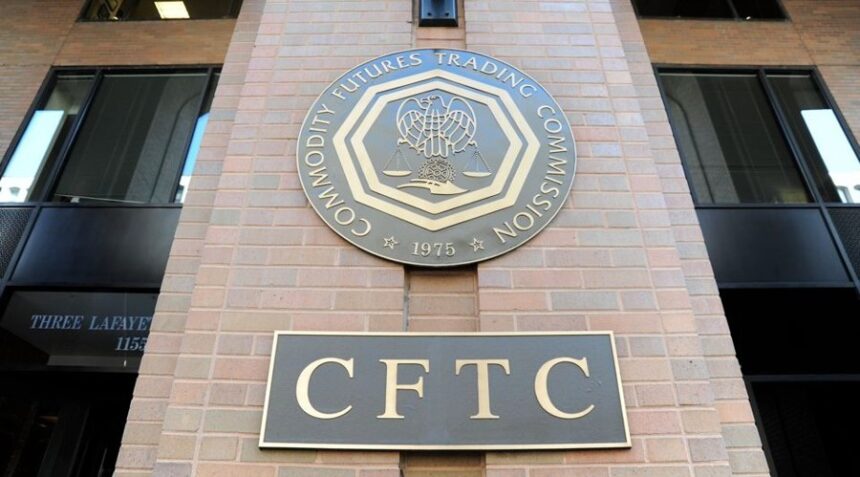
The Commodity Futures Trading Commission (CFTC) has initiated a lawsuit against New York, aiming to prevent the state from enforcing its gambling laws on federally regulated prediction market platforms. This legal action highlights the ongoing conflict concerning whether federal or state authorities should govern event-based contracts.
The lawsuit, filed in the U.S. District Court for the Southern District of New York, asserts that federal law assigns the CFTC exclusive jurisdiction over derivatives markets, specifically including prediction contracts traded on registered exchanges. The agency is seeking both a declaratory judgment and a permanent injunction to stop the enforcement actions by New York. This move is part of a broader strategy by the CFTC to establish a consistent national framework for prediction markets, following similar lawsuits filed against Arizona, Connecticut, and Illinois.
The trigger for this legal confrontation stemmed from New York’s recent lawsuits against platforms operated by Coinbase and Gemini, claiming that their prediction market offerings violate state gambling regulations. Additionally, the state took action against Kalshi, mandating it to suspend specific sports-related contracts. The CFTC argues that these state actions disrupt federally regulated markets. Michael Selig, the CFTC Chair, remarked on the issue, asserting that CFTC-registered exchanges are facing numerous state lawsuits that threaten to limit access to event contracts and undermine the commission’s authority over prediction markets.
In response, officials in New York insist that prediction contracts associated with real-world events fall under the umbrella of existing gambling laws, necessitating compliance with state-level regulatory measures.
The conflict raises significant concerns about regulatory fragmentation, as firms operating prediction markets must navigate a complex landscape of conflicting federal and state regulations. This uncertainty poses challenges to market access and product development for these firms.
State officials are pushing back against the CFTC’s claims, as evidenced by a coalition of 37 state attorneys general, including New York, that filed an amicus brief in a parallel case in Massachusetts. The coalition argues that federal derivatives law was not designed to legalize or regulate sports betting and does not explicitly overrule state authority. They caution that endorsing the federal argument could undermine established consumer protections, including those related to licensing, age restrictions, fraud prevention, and mechanisms to combat gambling addiction.
Statements from New York Attorney General Letitia James and Governor Kathy Hochul reflect a steadfast commitment to consumer protection, asserting that state gambling laws are tailored to safeguard the interests of consumers, irrespective of the platform utilized.
This resistance from state authorities diminishes the chances of a unified national framework in the near future. The outcomes of ongoing legal battles will significantly influence whether prediction markets can operate seamlessly across the United States or be confined to a piecemeal framework dictated by each state.
As prediction markets continue to expand, attracting institutional interest and increasing trading volumes on platforms like Kalshi and Polymarket, the enforcement actions by state regulators are intensifying. Legal actions against prediction platforms from states like Arizona, Connecticut, and Illinois, along with a recent ruling in Nevada extending a ban on certain contracts offered by Kalshi, underscore the urgent need for clarity in the regulatory framework.
The resolution of these disputes will ultimately dictate whether prediction markets will primarily function as financial derivatives governed by federal law or as gambling products subject to state regulations. This distinction bears significant implications for operators concerning licensing, compliance demands, and the capacity to offer products across the nation.