Shares of global pharmaceutical company Eli Lilly experienced a decline of 3.6% during the afternoon trading session, triggered by disappointing weekly prescription numbers for its key weight-loss products. The data for the week ending April 17 revealed a decrease in prescriptions for Eli Lilly’s injectable weight-loss medication, Zepbound. In contrast, prescriptions for rival Novo Nordisk’s Wegovy demonstrated an upward trend, intensifying concerns about Eli Lilly’s competitive positioning in the weight-loss market.
Of particular concern for investors were the preliminary prescription figures for Eli Lilly’s newly launched oral obesity pill, Foundayo. In its second week on the market, Foundayo managed to capture 3,707 prescriptions. This figure stood in stark contrast to the 18,410 prescriptions achieved by Novo Nordisk’s competing oral medication over the same timeframe. The total shares for Eli Lilly closed the day at $883.89, marking a 3.7% decrease from the previous closing price.
The stock market is known for reacting strongly to news, and steep declines can indicate potential buying opportunities for high-quality stocks. This has led analysts to wonder whether now might be a strategic time to invest in Eli Lilly. The company’s shares have proven somewhat volatile over the past year, with ten instances of price moves greater than 5%. This latest decline suggests that market participants view the recent news as significant, although it does not appear to fundamentally alter the perception of Eli Lilly’s business prospects.
Notably, the last substantial movement in the stock occurred just 23 days prior, when it surged by 4.7% following the FDA approval of Foundayo (orforglipron). This once-daily oral weight-loss solution represents a needle-free alternative for obesity management, avoiding the strict dietary restrictions that can deter patients from competing oral GLP-1 medications.
Eli Lilly’s investors were also optimistic after the company’s $7.8 billion acquisition of Centessa Pharmaceuticals, marking a strategic shift towards the neuroscience and sleep-wake disorder markets. This move reflects Lilly’s proactive strategy to diversify its revenue streams and reduce long-term dependency on metabolic health products.
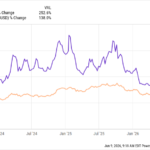
Despite the current downturn, Eli Lilly is down 18.2% year-to-date, with its shares trading at $883.89—20.4% lower than its 52-week high of $1,110 reached in November 2025. Nonetheless, investors who purchased $1,000 worth of Eli Lilly shares five years ago would now see that investment valued at approximately $4,721.