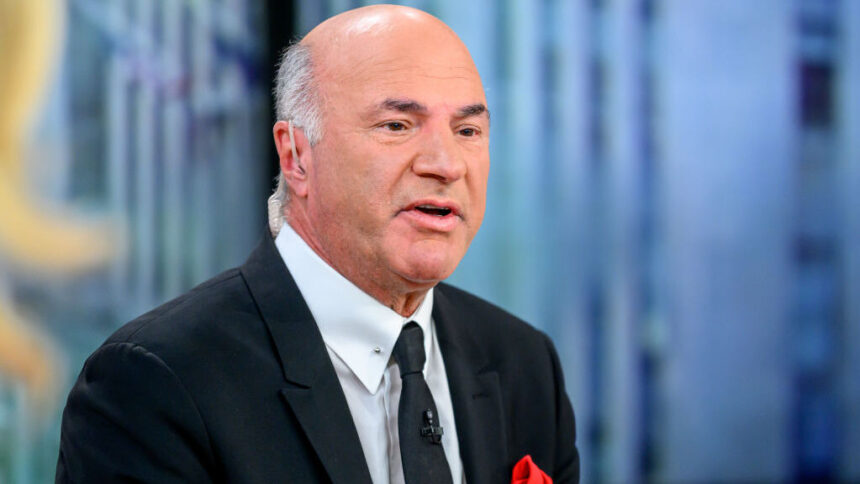
In a recent episode of The Breakdown Podcast, prominent venture capitalist and investor Kevin O’Leary expressed strong skepticism towards the future of altcoins, calling them “poo poo” and suggesting they possess “no future.” His dire assessment comes even as the altcoin market continues to attract attention, valued at over $700 billion according to crypto tracker CoinMarketCap.
O’Leary, known for his blunt communication style, stated, “I cut the garbage and keep what works,” during the interview. His comments follow a broader trend of fluctuating market sentiments in the cryptocurrency ecosystem. Since a significant decline in February, Bitcoin has struggled to regain momentum, lingering below the $90,000 mark and far from its peak of over $120,000.
O’Leary’s strategy in the wake of the 2025 market crash has been to divest himself of 26 altcoins, retaining only Bitcoin, a stablecoin (USD), and Ethereum — the largest altcoin by market capitalization. He argues that many altcoins are “screwed” due to their lack of marketing resources and overall utility, stating, “there’s no reason to own them.”
Yet, data suggests that altcoins are not entirely abandoned within the broader crypto market. With a significant portion of investors still monitoring their performance, the CMC Fear and Greed Index has notably shifted from “extreme fear” to “greed,” as investors anticipate Bitcoin’s potential recovery.
However, O’Leary’s assertion that the majority of altcoins that collapsed in 2025 “never came back” holds weight, particularly given CoinGecko’s finding that over 50% of all coins tracked from 2021 to 2025 have failed, with a staggering 86 failures occurring in 2025 alone. The cryptocurrency space has seen a proliferation of meme coins—quickly generated tokens often devoid of long-term viability—further complicating the altcoin landscape.
This trend is not new. Historical data indicates that approximately 91% of crypto coins that existed as far back as 2014 are now obsolete. Many of these coins did not meet market expectations, while others suffered from fraudulent practices leading to “rug pulls.”
Experts liken the performance of many altcoins to that of penny stocks, which are notoriously unstable. Research indicates that approximately 60% of penny stocks lose their value within three years, highlighting the inherent risks associated with altcoin investments.
Despite O’Leary’s warnings, a portion of the crypto market is still ripe for exploration. The Securities and Exchange Commission (SEC) and the Commodity Futures Trading Commission (CFTC) have recently begun classifying certain assets as “digital commodities,” indicating a growing regulatory clarity that helps distinguish viable projects from speculative ventures. Assets like Solana and Chainlink, which serve as platforms for smart contracts and secure transactions, respectively, fall into this “digital commodity” category.
For investors willing to navigate this volatile landscape, looking at cryptocurrencies with genuine utility may be a more prudent strategy. These assets are often less likely to be abandoned and might draw institutional interest over time.
Nevertheless, it remains crucial to tread carefully, as even classified digital commodities can experience significant fluctuations. Currently, even Bitcoin, often referred to as “digital gold” for its relative stability, remains over 30% down from its all-time highs. The overarching message from O’Leary—and a guiding principle in the crypto space—is that disciplined investing is essential for success.