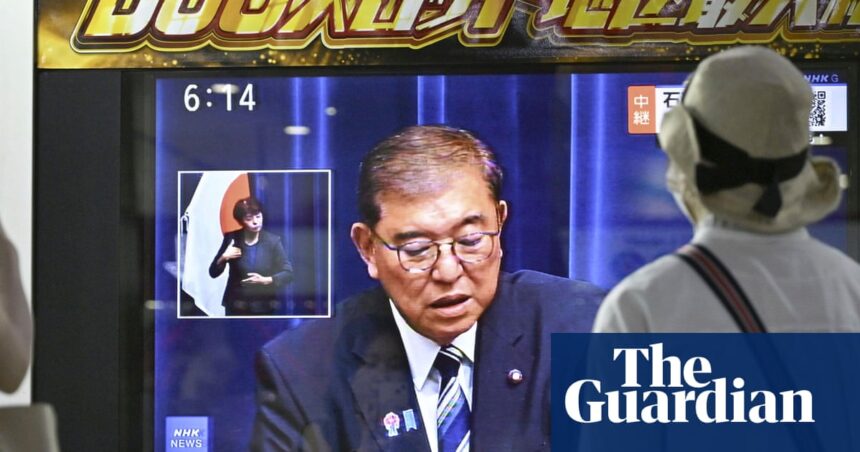
The unexpected announcement of Prime Minister Shigeru Ishiba’s resignation on a Sunday evening has sent shockwaves through Japan’s political landscape. Although the timing caught many off guard, the groundwork for his departure had been laid shortly after he assumed office.
Ishiba, who secured leadership of the Liberal Democratic Party (LDP), called for a snap election in response to a significant funding scandal that threatened the party’s credibility. The decision aimed to rally public support and silence dissent within the party’s right faction. Unfortunately, the election turned into a political miscalculation. The LDP, a dominant force in Japanese politics for almost 70 years, lost its majority in the lower house, forcing Ishiba to govern as the head of a minority administration.
In the months that followed, Ishiba’s government faced a series of challenges including rising rice prices, the aggressive trade policies of U.S. President Donald Trump, and heightened tensions with North Korea. These setbacks were compounded by a crucial upper house election in July, where the LDP was again stripped of its majority. This outcome served as a stark reminder to Ishiba of the unresolved funding scandal, which had previously implicated numerous party members for siphoning off unreported profits from fundraising events for personal gain.
Ishiba’s predecessor, Fumio Kishida, had already acknowledged the public’s growing discontent with political ethics by issuing an apology and halting fundraising events during his tenure. However, the lack of substantive action on the matter has only intensified public anger. Ishiba faced backlash himself when he provided gift certificates to new LDP members, a gesture seen as emblematic of a deeper issue with financial misconduct within the party.
Editorials in major publications, including the Mainichi Shimbun, have noted that lawmakers underestimated the public’s outrage over the scandal. Ishiba defended his administration’s efforts to combat the issue by abolishing undisclosed “policy activity expenses,” but he and fellow LDP members resisted measures to ban corporate and group donations entirely. The lack of accountability, evidenced by numerous lawmakers and their aides escaping indictment, further fueled voter disillusionment.
The same funding controversy that led to Kishida’s downfall ultimately sealed Ishiba’s fate. As the LDP prepares for a leadership election in early October, the party is now seeking a successor capable of navigating the tumultuous political waters and restoring its reputation.
Political analysts, including Tobias Harris from Japan Foresight, suggest that party leaders will likely prioritize unity and public appeal in their selection process. The current atmosphere has raised the stakes, with various factions within the party vying for influence. The focus on resolving internal divides may overshadow discussions about critical issues such as economic strategies and foreign policy, as the LDP grapples with its potential existential crisis.
Reflecting on the election results, Ishiba admitted that voters had issued a “severe judgment” of the party, a sentiment he reiterated following the upper house debacle. Without a swift regrouping of party factions, and potentially rallying around a charismatic figure like Shinjiro Koizumi, a third period of opposition for the LDP could be on the horizon—marking a historic shift in Japan’s political landscape.