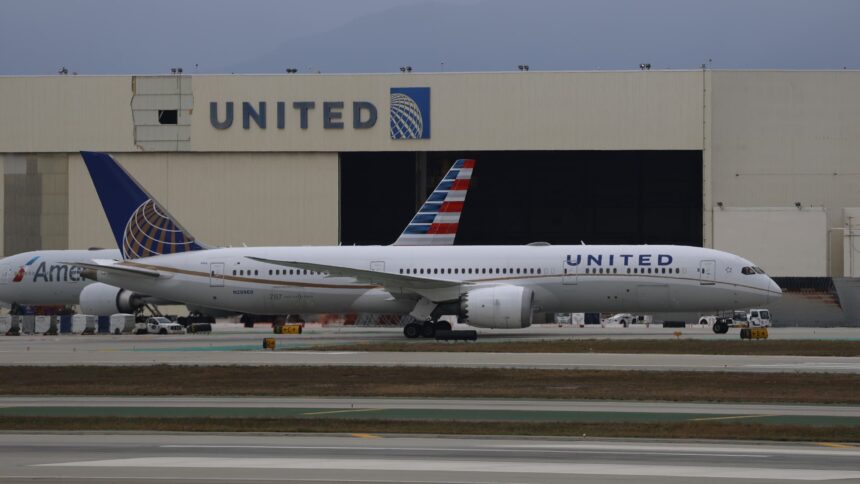
A United Airlines plane was observed taxiing at Los Angeles International Airport on April 21, 2026, amid significant changes in the airline industry due to rising jet fuel prices. In the wake of ongoing conflicts in Iran, the Strait of Hormuz has effectively closed, causing jet fuel prices to surge dramatically. This surge comes just as the travel industry prepared for the spring break rush, presenting both challenges and opportunities for airlines.
Despite the increased costs, airline executives report that consumers are continuing to prioritize travel. This resilient demand is coupled with a brighter outlook for peak summer travel, although concerns linger regarding demand as the year progresses, especially since travelers typically do not book flights far in advance. In March, travel-agency ticket sales rose by 12% year-over-year, reaching $10.4 billion, with a 5% increase in domestic trips and a slight 1% rise in international trips, as indicated by the Airlines Reporting Corporation.
Ticket prices have also increased significantly, with domestic economy fares averaging $570—up 21% from the previous year. Premium seat prices have also climbed, now averaging $1,444 per trip, reflecting a 17% increase. This rise in prices has not deterred consumers, with JetBlue Airways CEO Joanna Geraghty noting during a recent earnings call that bookings have remained “resilient” despite these changes.
The ongoing conflict in Iran has added over $6 billion to the costs faced by U.S. airlines this year. Nonetheless, airlines like JetBlue forecast revenue increases—up to 11% for the second quarter—despite the war’s negative impact being described as the industry’s most significant challenge since the COVID-19 pandemic. American Airlines also projects revenue growth of 13.5% to 16.5% for the upcoming quarter, with CEO Robert Isom citing the company’s effective management of load factors and capacity.
Major carriers, including Delta Air Lines and United Airlines, express optimism about fare growth, particularly as they rely more on revenue from premium seating options. In contrast, budget airlines with fewer premium offerings, represented by the Association of Value Airlines, are facing significant challenges and have requested $2.5 billion in aid from the government to offset rising fuel prices.
As budget carriers prepare to present their outlooks to investors, questions remain about how they intend to address the cost pressures given their lower average fares compared to larger competitors. Even with a decrease in crude oil prices, immediate relief for jet fuel prices remains uncertain due to the longer timelines for refining and transportation costs. Analysts suggest that, with airfares having lagged behind general inflation since the pandemic, there could be potential for sustained high fares, which could lead to significant revenue and margin growth for airlines by 2027, assuming demand remains stable.