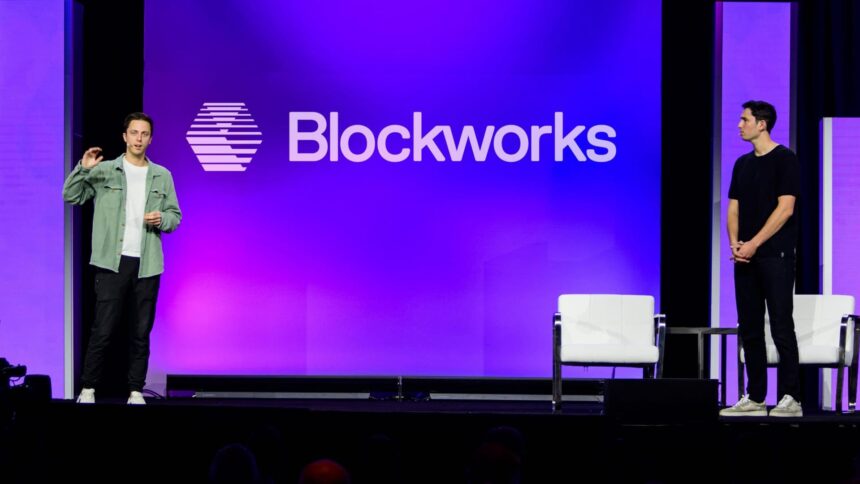
Crypto startup Blockworks is embarking on an ambitious plan to enhance its offerings in the digital assets space following a significant fundraise, as revealed by co-founder Jason Yanowitz in a recent interview. The company aims to establish itself as a key resource for traders by building a comprehensive data platform focused on on-chain assets, including cryptocurrencies, equities, commodities, and real-world assets hosted on blockchains.
Yanowitz envisions Blockworks becoming a leading provider of high-quality tools akin to those offered by established financial data organizations like Morningstar, FactSet, Moody’s, and S&P Global Research, which currently lack equivalents in the crypto sector. “We’re so behind on data and research and information for digital assets,” he stated, emphasizing the need for such resources in a rapidly evolving market.
To achieve this vision, Blockworks plans to acquire several competitors using proceeds from its recently completed Series A extension round, which was co-led by ParaFi Capital and Reciprocal Ventures, along with investment from Coinbase’s venture arm. Although the specific amount raised was not disclosed, this round reportedly valued Blockworks at $192 million. Yanowitz did mention that the company experienced a remarkable growth in annual recurring revenue of over 500% last year and is continuing to scale at a rapid pace. A notable portion of this growth has been attributed to Blockworks’ successful events business, including the Digital Assets Summit, a prominent conference focused on institutional crypto discussions.
The cryptocurrency data landscape is characterized by a multitude of crypto-native companies that seek to collect, clean, aggregate, and provide blockchain data for traders. Despite the potential value of this industry reaching billions, there is no definitive leader in the market, complicating access to reliable trading data. Retail and institutional traders frequently find themselves sifting through a mix of tools and services, which is both cumbersome and costly, potentially hindering widespread market participation.
Recent changes in the U.S. regulatory landscape have fueled a resurgence in the crypto market. Over the past two years, the regulatory environment around tokenized assets has softened, allowing for greater market stability and wider access to cryptocurrencies. The approval of spot bitcoin and ether ETFs by the Securities Exchange Commission, along with legislation such as the Genius Act underscoring stablecoin regulations, has further boosted interest and participation from both institutional and retail investors.
Despite the growth in the cryptocurrency sector, Yanowitz pointed out that the infrastructure supporting reliable data is still significantly lacking. He remarked that every historical asset class has depended on trustworthy data, investor communication, and issuer accountability, yet similar foundational support remains elusive in the crypto world.
“Crypto has a trust problem, and it is two-sided,” he noted. “Businesses have not done the work to earn institutional trust, and investors do not have the information they need to underwrite the asset class. We are here to fix both sides of that.” By addressing these critical gaps, Blockworks aims to facilitate broader adoption and understanding of digital assets, ultimately enhancing the overall market experience for traders and investors alike.