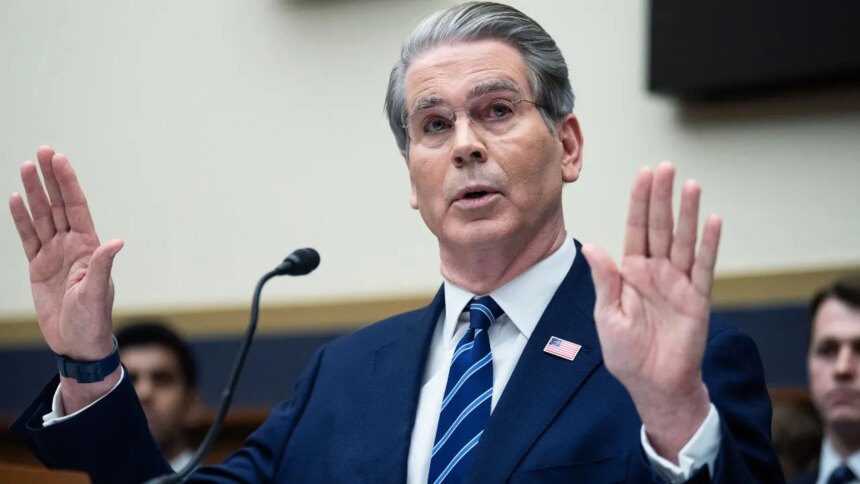
In a recent discussion on ‘Kudlow’, U.S. Treasury Secretary Scott Bessent provided an in-depth analysis of the ongoing Operation Economic Fury, which seeks to amplify economic pressure on the Iranian regime. Bessent emphasized that the campaign has placed Iran in a state of crisis, marking a significant escalation in U.S. efforts to undermine Tehran’s financial stability.
Operation Economic Fury is designed to dismantle Iran’s financial infrastructure by aggressively seizing Iranian assets, freezing bank accounts worldwide, and urging foreign nations to sever their ties with Iran. “We are freezing bank accounts everywhere,” Bessent stated, underscoring the strategy’s broad impact. He noted that all Iranian assets abroad, including retirement funds and luxury properties in locations like southern France, are now under scrutiny and control, emphasizing that these actions are made in the interest of the Iranian populace.
In terms of tangible impacts, Bessent revealed that the U.S. Treasury has successfully seized close to $500 million in Iranian cryptocurrency assets. He underscored that these measures are not arbitrary but are meant to weaken the regime economically. Bessent highlighted the campaign’s origins, pointing to its initiation in March 2025 under President Donald Trump’s orders, which collectively pushed Iran toward an economic standstill, culminating in a banking collapse that triggered rampant inflation and a dramatic devaluation of its currency against the U.S. dollar.
Bessent indicated a decisive shift in the administration’s approach, with renewed orders to escalate pressures on Iran. He mentioned recent warnings sent to buyers of Iranian oil regarding the prospect of secondary sanctions they might face for engaging in transactions with Iranian interests. This represents a strategic tightening of the economic noose around Iran.
The broader picture includes the U.S. naval blockade in the Strait of Hormuz, a vital artery for global oil trade. Bessent noted that operations at the Kharg Island port have nearly come to a halt, suggesting a precarious situation for Iranian oil storage that could lead to capping wells—an action that would have long-term repercussions for the country’s oil production capacity.
In his closing remarks, Bessent warned that ongoing pressure could adversely affect Iran’s military funding capabilities and its support for proxy groups such as Hezbollah and Hamas. The overarching goal, he reaffirmed, is to limit Iran’s ability to engage in terrorist activities worldwide.
The Treasury’s campaign shows no sign of abating as negotiations between the U.S. and Iran remain stalled. Bessent reiterated that the combination of strategic economic pressure and military controls will persist as long as necessary.