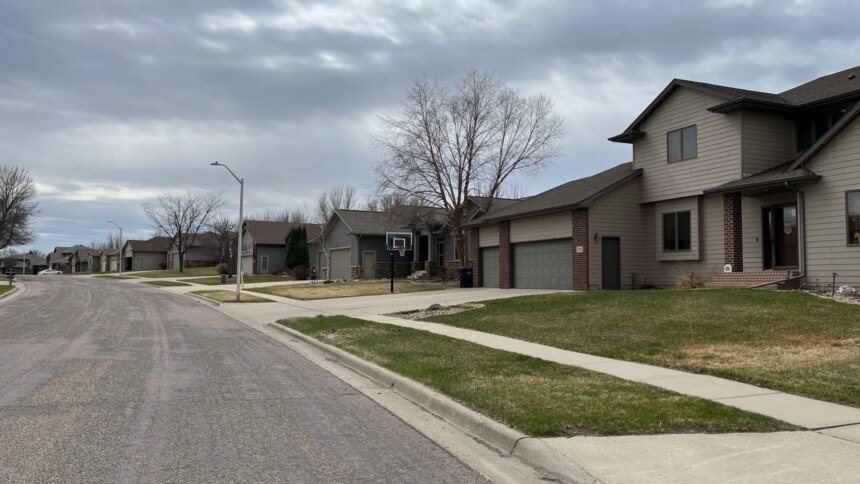
Homeowners in South Dakota will soon experience the benefits of two newly approved property tax reduction laws, set to take effect as soon as next year. These laws, approved in March, enable the application of higher sales tax revenue towards the reduction of taxes on owner-occupied homes. Notably, one law will activate automatically without formal notification, while the other relies on county participation for implementation.
The first law involves the restoration of the state sales tax rate from 4.2% to 4.5%, scheduled for July 2027, following a temporary reduction period. The second law introduces an optional county-level sales tax of up to 0.5%, which can be enacted either by county commissions or a public vote. In counties that choose to adopt this sales tax, the generated revenue will be utilized to lower the county portion of property taxes for owner-occupied residences, with homeowners receiving a credit on their property tax statements.
According to estimates from the Governor’s Office, homeowners could expect an average credit of approximately $660, though individual amounts may vary based on personal circumstances. The earliest that counties can begin implementing the additional sales tax is January 2027, with property tax credits likely to appear on bills sent out in January and February of that same year.
State financial officials highlight that larger counties, such as Pennington, Minnehaha, and Lincoln, might be able to credit homeowners’ property taxes as soon as next year, assuming effective planning and cash flow management. Conversely, smaller counties with less stable sales tax revenues may have to delay tax credits until 2028 or one year post-implementation of the county sales tax. Lawrence County Commissioner Eric Jennings emphasized the potential burden on homeowners in such areas, noting that they may face a “double tax” situation for a year—paying both the full property tax bill and the newly increased sales tax before receiving any relief.
Beyond county-level initiatives, statewide property tax relief is also on the horizon. Although the uptick in the state sales tax will not officially take effect until July 1, 2027, homeowners should anticipate reductions reflected in their property tax bills issued in January or February of that year. To kickstart the relief process, lawmakers plan to utilize $56 million from state reserve funds, coupled with the initial revenue from the tax increase, to establish a property tax reduction fund.
For homeowners, this translates to a potential savings of $168.30 per $100,000 of their home’s valuation, equating to about $547 for a home worth $325,000. These figures are particularly relevant for school districts that employ the maximum allowable property tax levy; districts operating at lower levies due to higher property values may still offer meaningful savings, according to state Department of Revenue representative Kendra Baucom.
Looking ahead, future funding for the property tax reduction initiative will rely entirely on revenue from the increased state sales tax, anticipated to generate approximately $114 million annually at the outset. However, fluctuations in sales tax collections could affect the stability of the fund. State officials remain optimistic that if sales tax revenues continue to grow, there could be opportunities for further reductions in property tax levies in subsequent years.