During a recent earnings call, Apple’s outgoing CEO Tim Cook revealed the company’s plans to apply for tariff refunds, positioning the tech giant to capitalize on the ongoing tariff landscape while also keeping an eye on political implications. Cook emphasized that Apple is “following the established processes” for these refunds and indicated that any recovered funds will be reinvested into U.S. innovation and manufacturing. This strategy, he noted, is in addition to previous commitments Apple has made to domestic investments.
Cook’s announcement comes amidst heightened scrutiny around tariffs, which have become not only a financial burden but also a political battleground. Former President Donald Trump has made it clear that he is watching the actions of major corporations, including Apple, regarding tariff reimbursements. During an April 21 appearance on CNBC’s “Squawk Box,” Trump implied that companies like Apple and Amazon, which had yet to announce plans to pursue refunds, were “brilliant” if they chose not to seek reimbursement. He suggested that their decision could impact how he remembers them politically.
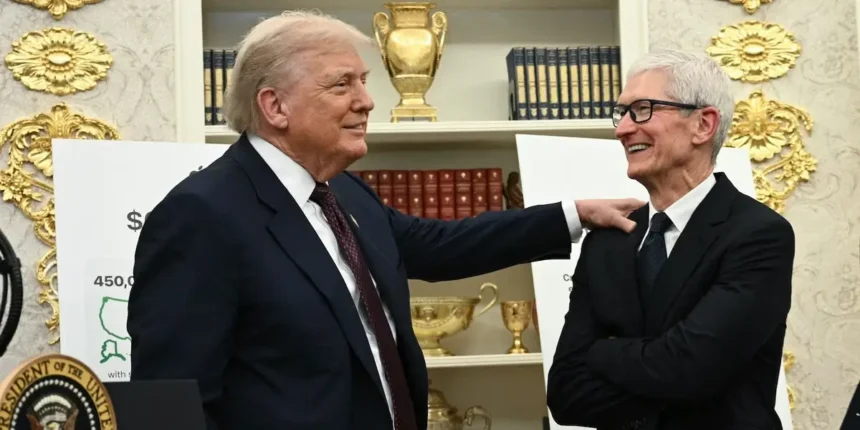
The discernible rapport between Cook and Trump has been a noteworthy aspect of Apple’s strategy. Throughout both of Trump’s administrations, Cook has successfully maintained a close relationship with the former president, previously securing tariff exemptions for Apple products. This dynamic has allowed Cook to navigate political challenges with a level of restraint and effectiveness that has distinguished him among his peers in the tech industry.
In the context of an evolving economic landscape, Cook’s focus on securing tariff refunds while promoting domestic reinvestment reflects a careful balancing act. Other companies are already experiencing financial benefits from similar tariff refund efforts. Ford, for instance, announced a substantial $1.3 billion refund, significantly boosting its quarterly profits. General Motors anticipates its own refund of approximately $500 million following a favorable Supreme Court ruling on tariffs.
Companies such as FedEx, UPS, and DHL are also in pursuit of refunds, with plans to pass along the savings to customers who initially bore the costs. These refunds are expected to materialize within 60 to 90 days as companies await disbursement from U.S. Customs.
As Apple gears up to navigate this complicated landscape, Cook’s concerted emphasis on U.S. investment aligns with broader corporate strategies aimed at managing both costs and political relations, ensuring the company continues to thrive in a challenging environment.