New York —
The financial markets have experienced a month marked by seemingly contradictory outcomes, with the S&P 500 achieving its best performance in nearly six years despite rising oil prices and climbing bond yields. This paradoxical situation has unfolded against the backdrop of ongoing geopolitical tensions involving Iran, as well as challenges ahead for energy prices and borrowing costs.
April saw the S&P 500 rebound impressively, surging more than 10% and reaching seven record highs following a difficult March. This was the index’s strongest month since November 2020, bringing relief to investors with 401(k)s and individual retirement accounts that had been adversely affected by recent market fluctuations.
The rebound is attributed to robust corporate earnings reports and a resurgence of optimism surrounding a potential ceasefire between the U.S. and Iran. Investors appear to be looking past the conflict, buoyed by the resilience displayed in U.S. corporate profits. Additionally, enthusiasm for advancements in artificial intelligence has also played a significant role; the tech-heavy Nasdaq composite surged 15% in April, marking its best month in six years.
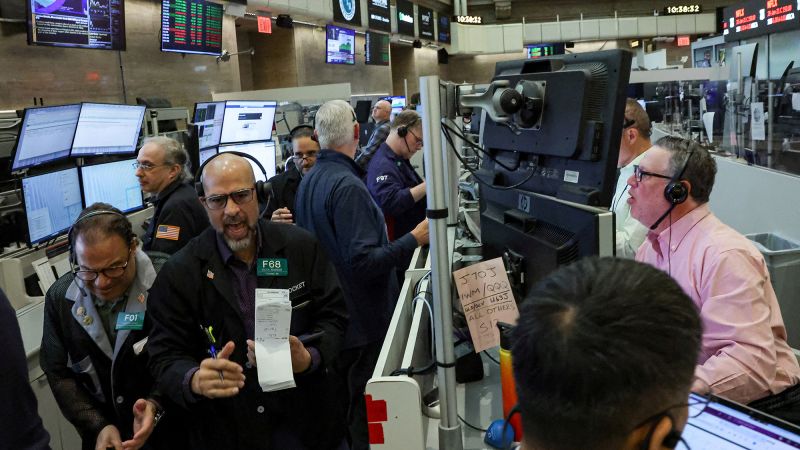
Underlying this market momentum are several factors. Algorithmic trading systems have contributed to the swift increase, automatically executing trades at predetermined levels. Furthermore, Wall Street traders have expressed a willingness to “buy the dip” in anticipation of participating in a market rally.
Bill Merz, head of capital markets research at U.S. Bank Asset Management, commented on the situation, noting that “corporate fundamental strength has overshadowed and offset uncertainty stemming from the Middle East conflict, the potential for higher inflation, and questions around policy direction.” He emphasized that the narrative surrounding strong corporate earnings is the key driver of market behavior.
However, risks remain on the horizon. The protracted nature of the Iran conflict raises concerns about potential inflationary pressures and impacts on economic growth. The bond market is grappling with rising energy prices, which are in turn leading to elevated borrowing costs. In late April, U.S. Treasury yields rose, with the 10-year Treasury yield hitting 4.4%—its highest level since March. This upward trend was driven by falling bond prices, as yields typically rise in such scenarios.
The increase in treasury yields has a direct influence on various interest rates throughout the economy, affecting everything from mortgage rates to loans for automobiles. The 30-year fixed mortgage rate, closely tied to the 10-year Treasury yield, climbed to 6.3% in the week ending Thursday.
Furthermore, the surge in oil prices, triggered by the closure of the crucial Strait of Hormuz—an essential shipping lane for crude oil—has further fueled inflation concerns. This uptick in oil prices has resulted in a national average gas price of $4.30 per gallon, the highest since 2022.
After an initial decline on April 7, following President Donald Trump’s announcement of a ceasefire, oil prices surged again towards the month’s end when negotiations failed to yield lasting agreements. Brent crude prices soared to a war-high of $126 per barrel on Thursday before settling at around $114 per barrel. Energy prices are expected to remain high as long as the Strait of Hormuz remains effectively closed, posing ongoing challenges for consumers and businesses alike.