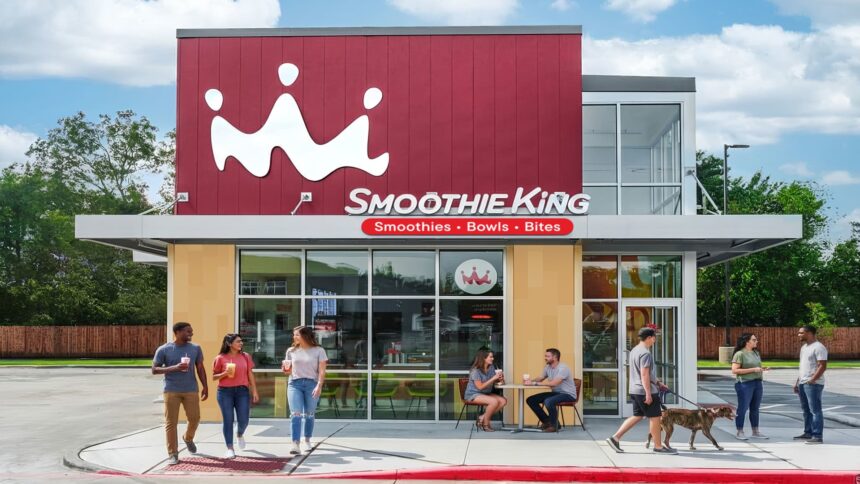
Smoothie King is experiencing significant growth, driven by evolving wellness trends and consumer preferences favoring nutritious options. The company, which claims to have coined the term “smoothie,” has been innovating under the leadership of CEO Wan Kim, who acquired the brand in 2012. Since then, Smoothie King has seen its system sales grow at a double-digit compound rate and expanded its number of locations by roughly 23% over the last five years.
A recent partnership with private equity firm Main Post Partners is set to further enhance the company’s ambitions for growth and innovation. The latest financial disclosures show that in 2025, Smoothie King’s revenue hit $66.16 million, reflecting a 4% increase from the previous year, even though net income decreased by 6%. Currently, the chain operates over 1,200 locations, with franchisees managing more than 96% of these stores.
As consumer demand shifts towards higher protein and fiber content, Smoothie King has capitalized on this trend, introducing new store designs that emphasize warmth and approachability, moving away from a more utilitarian look. The chain plans to roll out this fresh aesthetic gradually while also committing to open more than 200 new locations, with about 90 anticipated in the current year alone.
The growing popularity of GLP-1 medications, known to impact appetite and dietary choices, has spurred an interest in nutrient-dense foods. Smoothie King has been proactive in addressing consumer desires for transparency and health-conscious offerings. The company completed its “Clean Blends Initiative” in 2019, which eliminated artificial ingredients and preservatives from its menu, positioning it as a leader in clean eating.
Felder noted that their “no-no” list of banned ingredients is more extensive than those of competitors such as Panera and Chipotle, highlighting Smoothie King’s commitment to quality. Moving forward, the chain plans to enhance its storytelling, focusing on its origins and the rationale behind banned ingredients to connect more deeply with health-conscious consumers.
In light of rising costs, including gas prices hitting $4 a gallon, some consumers are tightening their spending. Despite this economic climate, Felder remains optimistic that customers will continue to seek out indulgent yet health-conscious options like the FiberMaxxing Smoothie. He posits that during tough financial times, consumers tend to prioritize purchases that enhance their well-being over those that induce guilt, suggesting that health-oriented businesses like Smoothie King could weather current economic challenges effectively.