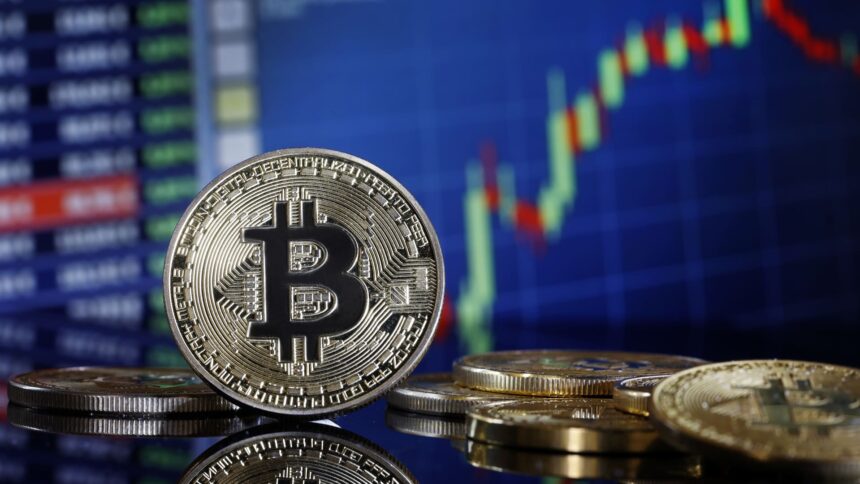
In April, Bitcoin experienced a notable surge, gaining 12.7% for the month, marking its strongest performance since April 2025 and the second consecutive month of increases. This positive trend followed a modest gain of 2% in March, providing a glimmer of hope after five months of declines. Ether, another leading cryptocurrency, also saw an 8% uptick, its best monthly performance since August, indicating some renewed interest in the crypto market.
However, analysts at CryptoQuant caution that this rally may not be as solid as it appears. They highlight that the increase in Bitcoin’s price relied heavily on perpetual futures trading—the primary source of leveraged crypto trading—acting as the “sole driver” of the recent rise. The firm emphasized that its apparent demand metric remained negative throughout April, indicating that spot purchases of Bitcoin were not experiencing a corresponding growth. Instead, demand for futures increased, raising concerns that the uptick in prices was more speculative than based on underlying market fundamentals.
Julio Moreno, the head of research at CryptoQuant, expressed concerns over this divergence, explaining that the surge in futures demand paired with stagnant spot demand often signals a precarious market situation. He warned that such conditions lack the solid foundation typically necessary to maintain price increases, suggesting that corrections could follow as futures positions are unwound.
The discussion also sheds light on the changing landscape of crypto exchanges and the critical role of derivatives. Perpetual futures, commonly referred to as “perps,” have become the primary platform for trading, liquidity, and price discovery. In contrast, traditional spot trading is declining in reliability, often depending on sustained accumulation cycles that are irregular in the current market environment.
Furthermore, the overall crypto demand has shown fluctuations, often reactive to external factors rather than stable growth patterns. Price movements in 2026 have been closely correlated with broader market trends, influenced by fluctuating U.S. interest rates and geopolitical tensions, rather than driven by consistent spot accumulation. The regulatory landscape remains uncertain, particularly with the stalled progress of the CLARITY Act, which aims to establish clearer market structures for cryptocurrencies.
Looking back, Moreno noted similarities between the current trends and those observed at the onset of the 2022 bear market, where increased futures demand coincided with dwindling spot demand. Such patterns frequently precede significant downturns, especially in a bearish market phase. Historical contexts included an aggressive rate-hiking cycle and significant disruptions within the crypto space, triggering a broader market correction.
In April, net inflows into Bitcoin exchange-traded funds (ETFs) reached $1.9 billion, elevating total net assets to over $100 billion. Furthermore, Bitcoin treasury companies increased their holdings by around 58,000 coins, valued at approximately $4.4 billion at the end of the month.
Bitcoin hit a high of around $79,500 in April but subsequently encountered a series of lower price points. As of the first trading day in May, it had risen over 2%, sitting just about 1% shy of its monthly peak. The evolving dynamics of the cryptocurrency market suggest that while optimism remains, vigilance is crucial as investors navigate this volatile landscape.