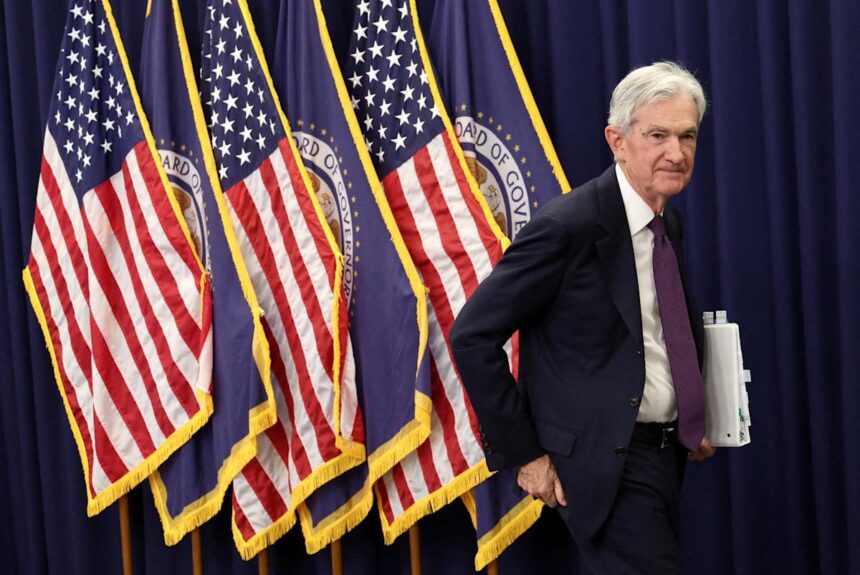
Jerome Powell’s eight-year tenure as the Federal Reserve chair has been marked by considerable turbulence and transformation. Beginning with a significant volatility shock, his leadership concluded with one of the most notable cross-asset rallies in the modern era of the Fed. The period has encompassed various unpredictable events, including the COVID-19 pandemic, the most severe inflationary pressures in four decades, a vigorous rate-hike cycle, a regional banking crisis, and persistent political scrutiny of the central bank’s decisions. Remarkably, despite these challenges, market performance remained resilient, with nearly every major asset class delivering gains.
Throughout his time at the helm, Powell aimed to establish credibility in combating inflation, drawing a parallel to former Fed Chair Paul Volcker, who famously tamed the inflation spikes of the late 1970s and early 1980s. However, the notable twist in Powell’s narrative is the resultant market rally. According to data from Bespoke Investment Group, the S&P 500 produced an annualized total return of 14.7% during Powell’s leadership—marking it as the third-best performance for a Fed chair since 1970.
More striking is the breadth of this market activity. Commodities, gold, and bonds also ended on a positive note under Powell’s watch. However, the positive conclusion in the bond market came after a period of significant turmoil, where long-term government debt experienced one of its sharpest selloffs in history due to inflation and aggressive rate hikes before eventually rebounding to finish the cycle positively.
Powell’s journey began in February 2018 amid a storm of volatility known as “Volmageddon,” which severely impacted popular market positions. Just two years later, the advent of the COVID-19 crisis forced the Federal Reserve into an emergency response, slashing interest rates to near zero while navigating stress in credit markets.
As inflation began to surge, Powell’s approach shifted dramatically. After initially characterizing inflation as “transitory” throughout 2021, the Fed took decisive action in 2022, enacting rate hikes at an unprecedented pace, leading to a bear market for stocks and retreat in bond prices. Investors were left questioning whether the Fed could rein in inflation without triggering a broader economic downturn.
Notwithstanding this unpredictable journey, an analysis from Yahoo Finance reveals that the S&P 500 index surged approximately 160% since Powell’s appointment, with the Nasdaq Composite rising nearly 250%. This impressive growth illustrates how markets continually adapted and found new catalysts during Powell’s years in charge.
The rebound seen in the aftermath of the COVID downturn was fueled by extraordinary monetary and fiscal measures. Rising inflation redirected investor interest toward commodities and gold. Eventually, the latter phases of Powell’s tenure were characterized by a remarkable stock market recovery—a rally less driven by Fed policies and more by corporate earnings, increased spending on artificial intelligence, and a heightened appetite among investors for dominant growth companies.
Overall, Powell’s time as chair has been anything but conventional, showcasing a remarkable ability of markets to evolve and thrive across diverse asset classes and economic climates. Rather than being defined by a singular trade, policy regime, or market segment, his leadership has unfolded as a sequence of distinctive market rallies—a testament to the adaptability of investors in the face of change.