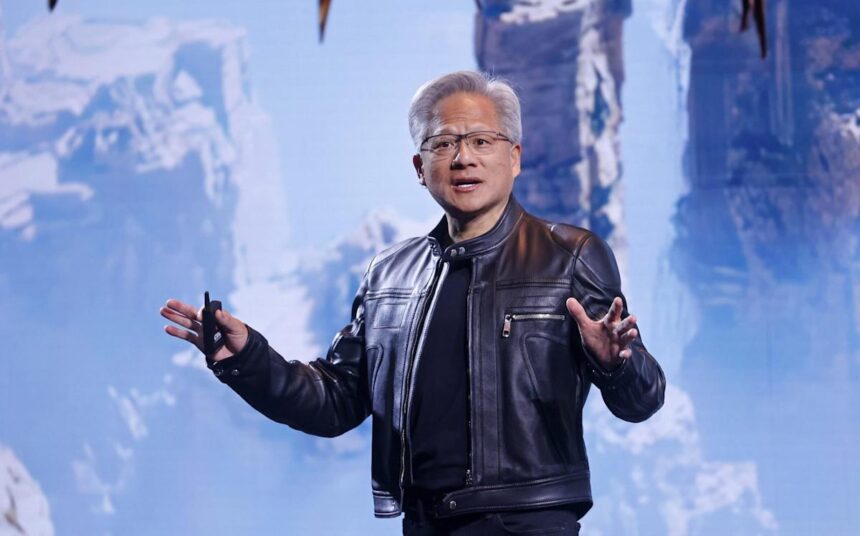
In a recent interview, Nvidia CEO Jensen Huang addressed the prevailing concerns about artificial intelligence (AI) potentially displacing large segments of the workforce. Huang emphasized the need for a balanced view of AI’s impact, cautioning against narratives that may create unnecessary fear. He specifically pointed out that overconfident executives who make sweeping predictions could mislead both the public and young professionals making career choices.
Huang argued that warnings of an AI-driven apocalypse often detract from the technology’s potential benefits. He noted that if young graduates are discouraged from pursuing careers in software engineering based on erroneous fears, the long-term repercussions could be detrimental—not just to individuals, but to the workforce as a whole. “If we convinced all the young college graduates to not be software engineers, and it turns out the United States needs more software engineers than ever, that’s hurtful,” he stated.
The rise of AI agents has made software development more accessible, enabling engineers to produce more code while reducing the barriers for newcomers to enter the field. Despite some investors expressing concern that enterprise clients may opt for AI to create their own platforms—thereby undermining traditional software companies—Huang remains optimistic about the transformative potential of AI in driving job growth.
While advocating for responsible regulations surrounding AI, Huang dismissed alarmist predictions that the technology could pose an existential threat to humanity. He referenced comments made by other industry leaders, such as Anthropic CEO Dario Amodei, who had previously estimated that AI could eliminate around 50% of entry-level jobs. Huang contended that such statements reflect a troubling mindset among some executives who may overestimate their understanding of complex technologies.
“These claims are made by people who are like me, CEOs,” he explained. “And somehow because they became CEOs, you adopt a God complex, and before you know it you know everything. And so I think we have to be careful and really ground ourselves to talking about the facts.”
In a contrasting view, Huang pointed out that AI has already resulted in the creation of over half a million jobs in recent years. Companies that adopt AI technologies tend to experience growth and increase hiring as a result. Data from hiring platform Indeed further supports this notion, showing a rising demand for software engineers.
Highlighting the distinction between job tasks and overall purpose, Huang remarked that while coding may be one of the tasks in software engineering, the broader goals involve innovation and problem-solving. He criticized the idea that the demand for coding remains static, arguing that the need for code is ever-expanding. “We need a trillion lines of code written,” he claimed, underscoring the necessity for more inventions across sectors like healthcare and manufacturing.
Huang also alluded to the concept of the Jevons paradox, which suggests that increased efficiency can lead to greater consumption. This theory has gained traction among economists, including Torsten Slok of Apollo Global Management, who posits that as AI makes tasks more efficient, it will ultimately create more jobs rather than eliminate them. He compared the phenomenon to the historical example of steam engines, which, instead of reducing coal consumption, actually increased it.
As the conversation around AI continues to evolve, Huang’s insights serve as a reminder that while caution is warranted, a mischaracterization of AI’s potential could lead to a workforce unprepared for the demands and opportunities of the future.